
In the condensation recovery device, the heat exchanger bears the core task of condensing the solvent vapor, and its selection directly affects the recovery effect, cleaning frequency and maintenance difficulty. The two commonly used structures-plate type and shell-and-tube type-each have their own tempers: plate type has high efficiency and small size, but has narrow channels and is afraid of dirt and blockage; shell-and-tube type has solid skin, dirt resistance, and good maintenance, but has large volume and low efficiency density. The selection is not more advanced than who, but depends on which structure's advantages and disadvantages are used and avoided.
The plate heat exchanger is stacked by corrugated plates. The fluid flows in a narrow channel, the corrugation constantly disturbs the flow field, and the heat transfer coefficient is high. The volume of the same heat exchange is only a fraction of that of the shell and tube type. At the cost of narrow channels (usually a few millimeters), sensitive to the cleanliness of the medium, the gasket limits the temperature and pressure resistance. The shell-and-tube heat exchanger is a tube bundle inside the shell, with two channels outside the tube. The channels are wide, the pressure is high, and the temperature resistance is good. The tube bundle can be extracted for cleaning and maintenance, but the heat transfer density is low, and the area and weight are large.
In a word, the plate type wins in efficiency and compactness, and is afraid of dirt and blockage. The shell-and-tube type wins in leather and good repair. The land occupation and weight are the price.
Where the medium is clean and the risk of scaling is low, plate type is preferred: clean airflow cooling in the pre-cooling section, heat recovery of condensate and cooling water, and heat exchange on the refrigerant side of the refrigeration unit. The fluid in these positions is clean and the temperature is moderate. The efficiency advantage of plate type is fully utilized, and the compact structure also makes it easier to skid the device. When selecting plate type, pay attention to the compatibility between gasket material and solvent. Amines and aromatic hydrocarbons have swelling effect on some gasket materials. When selecting plate type, submit the medium list to the manufacturer for verification.
The maintenance of the plate type is strongly related to the pre-filtration: the plate type that is filtered in place can operate stably for a long time, the pressure difference of the plate type that is lost in the filtration will soon rise, and the frequency of disassembly and washing will increase greatly.
Cases containing dust, easy polymerization and scaling risk are handed over to shell-and-tube type: dry tail gas containing ink mist and dust, condensation section of easy self-polymerization monomer, heat exchange of viscous condensate. Under these working conditions, shell-and-tube type dirt resistance with wide channel is obviously superior. Take the dirty side of the tube (mechanical cleaning can be disassembled), and take the clean side of the shell, and the cleaned organization will be smooth. The location of pressure and large temperature difference is also preferred to the shell and tube type, and the plate type is more sensitive to thermal stress under large temperature difference and pressure fluctuation.
| Considerations | Plate | shell and tube type |
|---|---|---|
| heat transfer efficiency | High, same area efficiency | Low, large area |
| Anti-dirty blocking | Narrow passage, afraid of dirty blockage | Wide channel, dirt-resistant |
| Cleaning and maintenance | Disassemble the plate and clean it. | Mechanical cleaning of tube bundle extraction |
| Temperature and pressure resistance | Restricted by gasket | High pressure and good temperature resistance |
| Floor weight | Compact and lightweight | Large volume and weight |
| Applicable occasions | Clean medium pre-cooling recovery | Dust-containing condensation under conditions of easy polymerization |
The selection depends not only on the heat exchange area of the nameplate: the scaling speed determines the frequency of maintenance, the accessibility of the heat exchange surface determines the working hours of maintenance, and the quality of cooling water determines the cleaning method of the water side. The heat exchanger in the condensation section also depends on the discharge of condensate-inclined installation, improper setting of low-point drainage and slope, condensate accumulation on the lower edge of the heat exchange surface, and the effective heat exchange area shrinks, which is the most common reason for "correct selection but poor effect" in actual operation. It is a consensus that the margin of heat exchange area is reversed according to the scaling speed and cleaning cycle, which is more reliable than 20% left by patting the head.
Not recommended. The medium facing the main condensation section has the highest risk of impurity and polymerization, and the plate type is easy to block at this position and has a high cleaning frequency. Plate type is used on the clean side (precooling and heat recovery) and shell type is used on the dirty side (main condensation). The two types of collocation have their own place.
First check whether the pre-filtration is invalid. Most of the rapid increase in pressure difference is caused by the loss of filtration. After the filtration is repaired, the pressure difference is still high before disassembly and washing are arranged. There are special tools and processes for plate disassembly and washing, which shall be operated according to the manufacturer's instructions. Don't pry hard and punch hard.
According to the scaling speed and cleaning cycle, the margin will be reserved according to the amount of heat exchange surface capacity decrease between two cleaning. 10% of the working condition with slow scaling is enough, and more than 30% of the working condition with easy scaling is reserved, and the cleaning period is shortened.
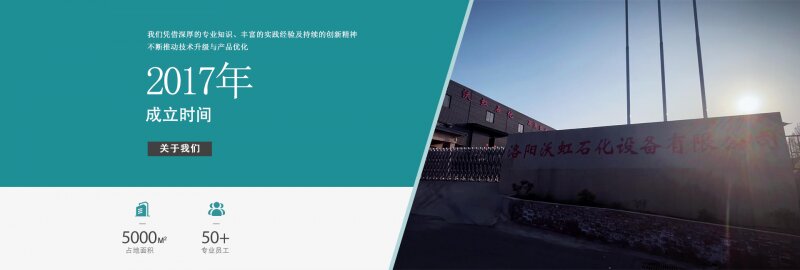
This article by LuoyangWohong PetrochemicalEquipment Co., Ltd. arranges that the company provides design, manufacturing and operation and maintenance services for condensation recovery, membrane separation recovery and complete solvent recovery devices for chemical and pharmaceutical enterprises. If you need process evaluation or scheme configuration, please contact and exchange.
Mr. Li 13526990215

Hotline





