n-Propyl acetate is a commonly used ester solvent in coating, printing ink, printing and fine synthesis industries. Its boiling point is about 101 ℃, which belongs to medium boiling point varieties: it volatilizes obviously at normal temperature, and a large number of high-temperature processes such as drying and distillation will enter the gas phase. The main line of its recovery can be summarized in two sentences: closed collection of tail gas, two-stage condensation to collect the main amount-first cooling to condense most of the steam, and then deciding whether to close the series of adsorption units according to the emission requirements.
First, the boiling point is moderate. The boiling point of about 101 ℃ is between ethyl acetate (about 77 ℃) and butyl acetate (about 126 ℃), and there is obvious volatilization when exposed to normal temperature. The unorganized emission at such positions as printing machine side and mixing room cannot be ignored. The emission concentration of high-temperature processes such as drying oven and distillation kettle is higher, and the collection system should be led out separately according to high-temperature working conditions.
The second is the limited solubility in water. The mutual solubility of esters and water is poor, and most of the water can be separated from the condensed recovery liquid by standing, the dehydration burden is obviously lower than that of ether alcohol varieties, and the reuse of the recovery liquid is relatively convenient.
The third is flammable. The flash point of n-propyl acetate is low, the fan selection, electrical explosion-proof and anti-static grounding of the exhaust system are treated as flammable medium, and the collection cover and pipeline are kept connected to ground.
Drying and distillation high-temperature exhaust gas is led out of the branch separately, and heat exchange and cooling is carried out before it is transferred to the main pipe, so as to avoid the accumulation of liquid during long-distance transportation. Open operation points such as deployment and cleaning shall be subject to local enclosure and directional exhaust, so as to restrict the air flow in the cover and then introduce it into the main pipe. The pipeline shall maintain the slope and set a low point to discharge the liquid. When multiple branches are merged, the air volume shall be approved according to the simultaneous use coefficient to avoid large air volume to dilute the concentration and increase the back-end load.
During the transfer of barreled materials, the barrel mouth is covered with the cover as it is used to reduce the exposure time of the liquid surface. Before the collection branch enters the condensation section, filter and remove foam to protect the heat exchange surface.
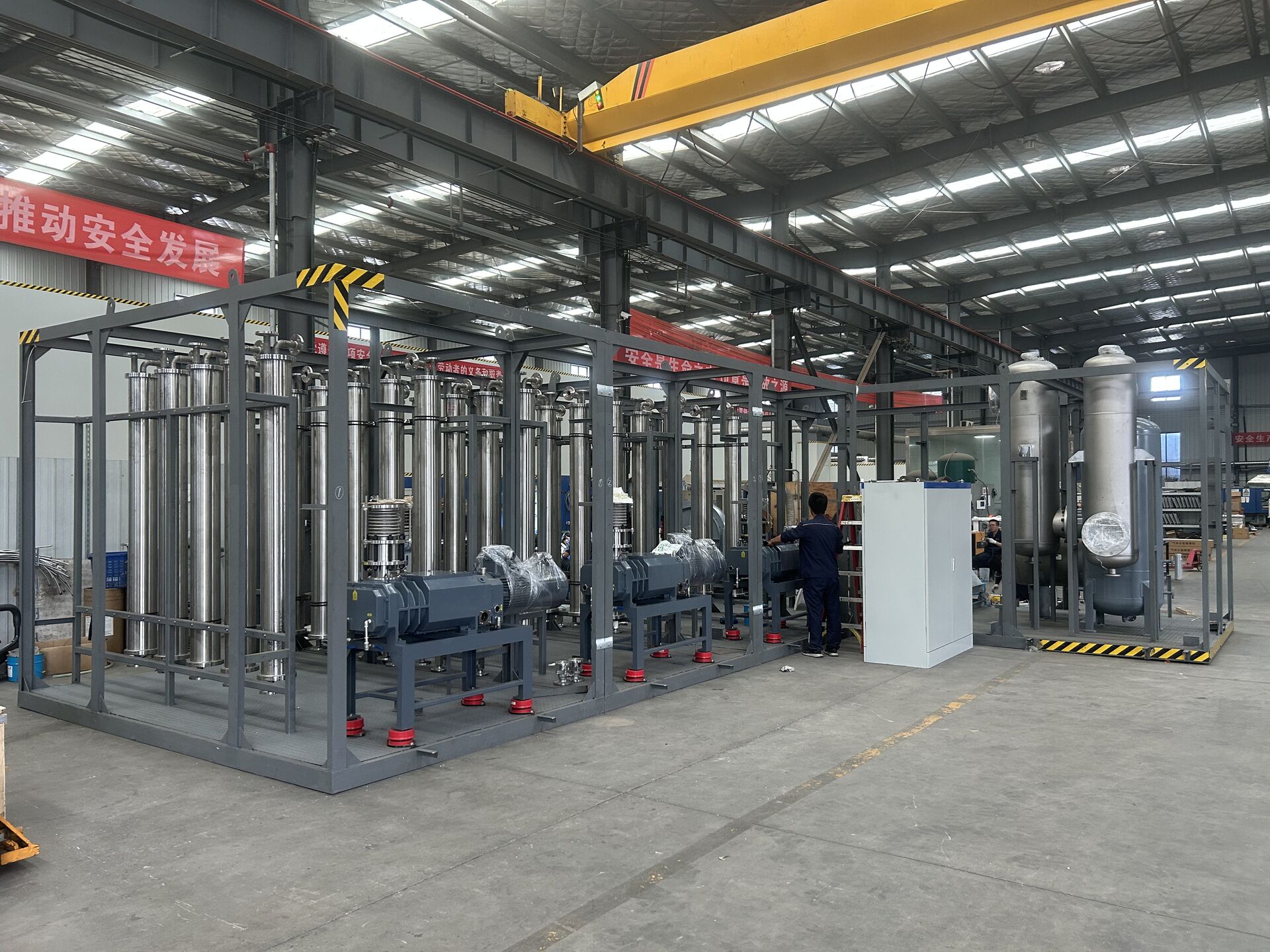
n-Propyl acetate is a medium boiling point variety, which can be condensed out by water cooling at normal temperature, but the load will be much smaller if the high temperature tail gas is cooled before entering the condensation section. In the two-stage arrangement, the main amount of normal temperature water or chilled water in the front stage is collected, and the lower temperature level of refrigerant in the rear stage is finished. How cold is low and how much the recovery rate can be determined by the measured concentration and recovery rate targets, not by estimation. In the case of strict emission requirements, the residual vapor is trapped in the primary adsorption unit after condensation, the adsorbent is periodically desorbed and regenerated, and the desorbed gas is returned to the condensation unit for closed-circuit recovery.
| Recycling route | Applicable scenarios | Configuration considerations |
|---|---|---|
| Single-stage or two-stage condensation | High concentration and relatively stable components | Reduce the temperature and load first, and the temperature level shall be approved according to the actual measurement. |
| Condensation adsorption finishing | Occasions with strict emission requirements | The main amount of condensation is collected, and the residue of the end adsorption pocket is collected. |
| adsorption concentration desorption condensation | Low concentration tail gas with large air volume and low concentration | Concentrate and reduce air volume first, and condense according to small air volume and high concentration |
The recovered liquid is allowed to stand still and stratify to separate water, and then filtered to remove impurities. According to the purpose of classification and reuse-the equipment can be reused after passing the inspection for cleaning and dilution purposes, and the ingredients and synthetic purposes sensitive to purity can be further refined according to the inspection data of moisture and distillation range. The recovery liquid shall be temporarily stored and kept closed. The container shall indicate the variety and detection status. The ledger shall record the input amount and recovery amount on a daily basis. When the recovery amount drops abnormally, priority shall be given to checking the sealing of the collection point and the drift of condensation temperature.
The main difference lies in the boiling point. Ethyl acetate is about 77 ℃, volatilizes faster, is difficult to condense at normal temperature, and the condensation section requires a lower refrigerant temperature. n-Propyl acetate is about 101 ℃, water cooling at room temperature can collect the main amount, and the allocation burden is lighter. Both belong to esters, and the recovered liquid is easy to be in line with the water layer and the dehydration idea of the latter section.
File by purpose. After cleaning and dilution, it can be reused after layering and impurity removal; For purposes sensitive to purity, it shall be refined according to the moisture and distillation range test data, and then reused after passing the retest.
First heat exchange and cooling to reduce the load, the branch with large air volume and low concentration should be adsorbed and concentrated before desorption and condensation, so that the condensation unit can operate stably under small air volume and high concentration.
Treat as flammable medium: fan explosion-proof type selection, pipeline anti-static crossover, regular test of electrical explosion-proof and safety devices, and grounding and conduction between collecting cover and pipeline.
This article by LuoyangWohong PetrochemicalEquipment Co., Ltd. arranges that the company provides design, manufacturing and operation and maintenance services for condensation recovery, adsorption recovery and complete solvent recovery devices for the paint, ink and fine chemical industries. If you need process evaluation or scheme configuration, please contact and exchange.
Mr. Li 13526990215

Hotline