
In today's increasingly environmentally conscious society, organic exhaust gas treatment has become a focus of attention for many enterprises. The composition of exhaust gas is a key factor affecting the effectiveness of organic exhaust gas treatment, and different pollutants require adaptation to different treatment processes.
Organic exhaust gas contains various pollutants, such as hydrocarbons, esters, ketones, alcohols, halogenated hydrocarbons, etc. The characteristics of these pollutants are different, and there are also significant differences in the requirements for treatment processes. Like hydrocarbon pollutants, their chemical properties are relatively stable, but when the concentration is high, if the treatment process is not properly selected, it is difficult to achieve the desired treatment effect. And ester and ketone pollutants, which have certain solubility and volatility, also require specific processes for treatment.
At present, common organic exhaust gas treatment processes in the market includeactivated charcoaladsorption,RTO(Thermal storage incinerator) and membrane condensation recovery, etc. The activated carbon adsorption process has simple operation and relatively low cost, but it has some obvious drawbacks. For example, activated carbon needs to be replaced frequently, which not only increases the cost of carbon replacement, but also results in hazardous waste, complicated processing procedures, and high labor costs. Moreover, activated carbon adsorption only transfers organic matter from exhaust gas to carbon, and does not truly solve the problem of exhaust gas pollution.
The RTO process has a good effect on treating exhaust gas, but the operating cost is high. Especially when dealing with low concentration exhaust gas, it is necessary to continuously supplement natural gas, which consumes a large amount of gas costs. Sometimes, the burned gas has a higher value than the recovered solvent. If the operating load is reduced, it will also lead to emissions not meeting the standards.
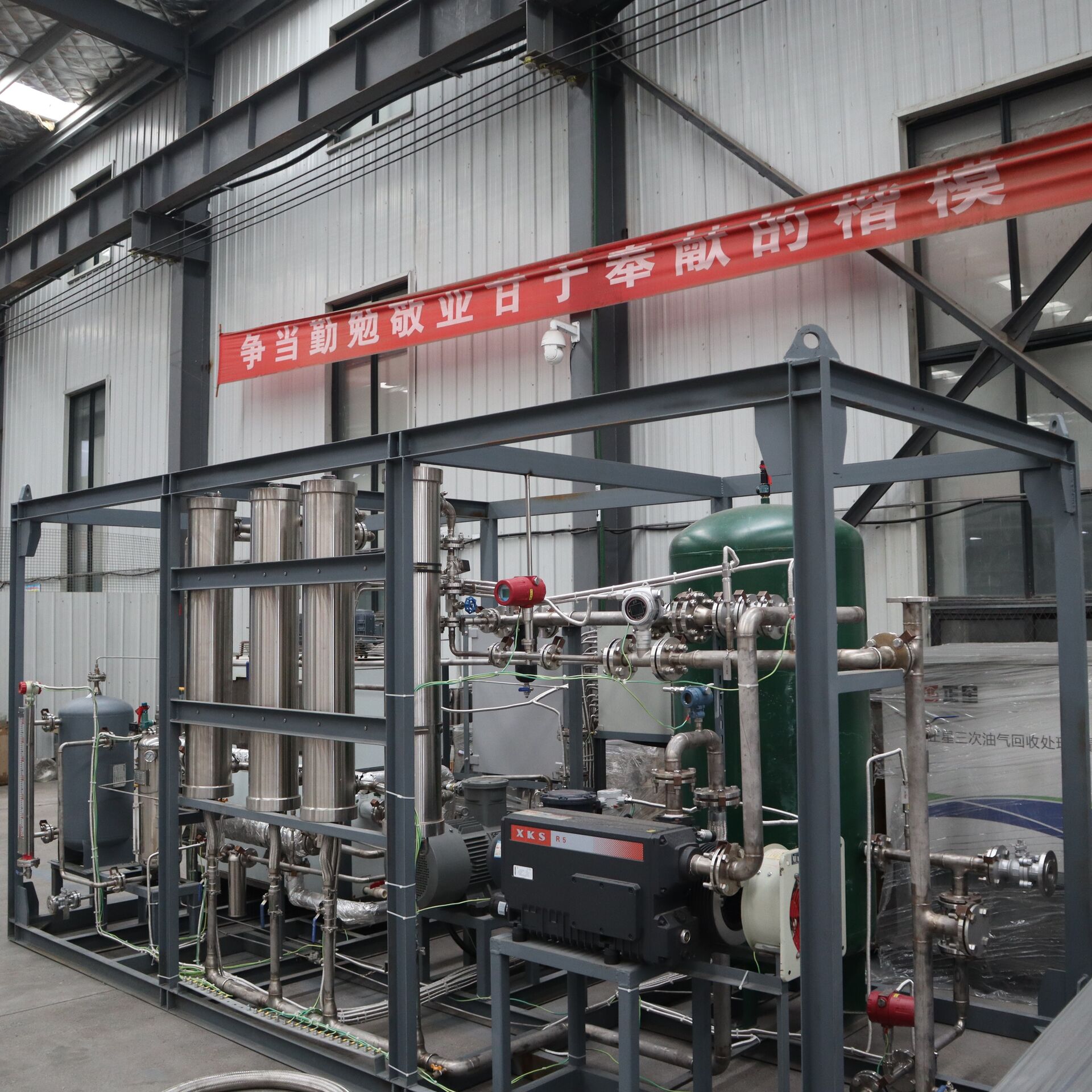
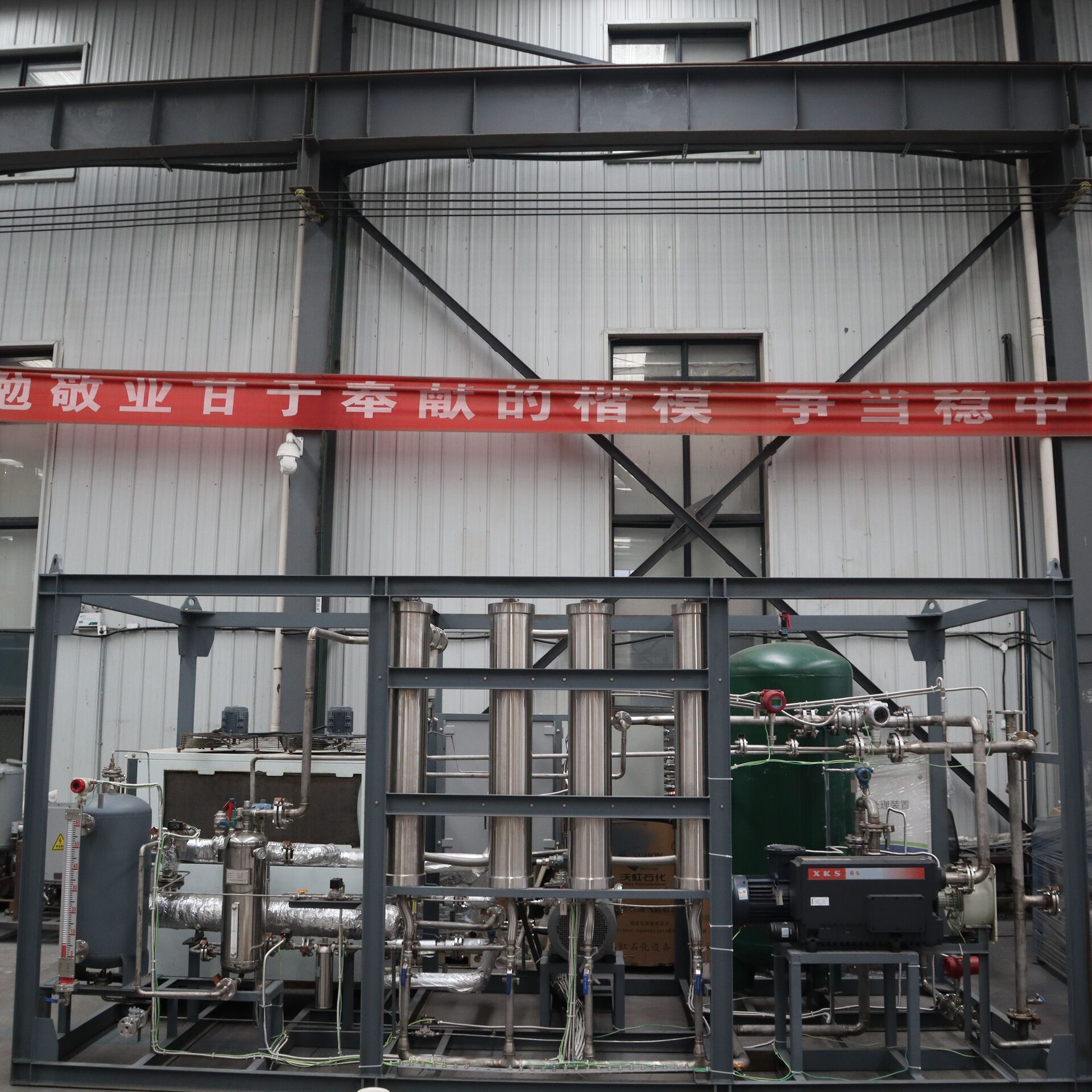
The membrane condensation recovery process has demonstrated unique advantages in these aspects. LuoyangWohong PetrochemicalLtd. focuses on the field of VOC waste gas treatment, its main membrane condensation recovery unit using three-stage condensation plus.gas separation membraneCombination process, suitable for chemical, pharmaceutical, gas station and other industries in the high concentration of organicwaste gas treatmentThe device has low operating costs and only consumes electricity. The refrigeration compressor and vacuum pump are both controlled by frequency conversion, which can automatically adjust the power according to the exhaust gas load and effectively control power consumption. Moreover, it can condense and liquefy organic solvents in exhaust gas for recovery, with a high level of purity. The recovered solvents can be directly reused for production or external sales, converting environmental protection expenses into economic benefits.
The core consumable membrane components of the membrane condensation recovery equipment of Luoyang Wohong Petrochemical Equipment Co., Ltd. have a long service life, relatively simple daily maintenance, and no worries about frequent replacement of consumables. The equipment adopts a modular integrated design, with all components integrated on a stainless steel base. It is assembled and tested before leaving the factory, and can be used on site by simply connecting the power supply and air duct. The installation cycle is short, the footprint is small, and there is also an optional explosion-proof configuration, suitable for explosion-proof places such as chemical and pharmaceutical industries.
In short, when choosing an organic exhaust gas treatment process, it is important to fully consider the composition of the exhaust gas and select the most suitable treatment process. Luoyang Wohong Petrochemical Equipment Co., Ltd., with its professional technology and high-quality services, provides reliable solutions for enterprises in the field of organic tail gas treatment, helping them achieve green and sustainable development.
Mr. Li 13526990215

Hotline





