
How to recycle low boiling point flammable solvent? Direct answer: The low boiling point solvent can only be condensed at a very low temperature under normal pressure. The pressure ratio of the single-stage refrigeration unit is limited, the efficiency drops sharply, and it cannot reach the corresponding temperature zone. The general solution is cascade refrigeration-two-stage refrigeration circuits are connected in series, the former stage dissipates heat to the latter stage, the temperature is pulled down step by step, and the intake pressure and dew point are raised by one stage with isothermal compression, and the load reduction. Flammable components should also be equipped with explosion-proof electrical, nitrogen sealing and interlocking cut-off, and the safety configuration and recovery capacity should be designed synchronously. This combination is common in the low boiling point solvent recovery conditions of fine chemicals. This article makes the combination and configuration points clear.
The difficulty lies in the temperature zone: the dew point of the low boiling point component is very low at normal pressure, which is out of reach for shallow cold, and the energy consumption and equipment cost of the compressor will increase sharply if it is directly cooled. What is more troublesome is explosion-proof. The flash point of low boiling point components is low and the lower explosion limit is not high. Once air penetrates or leaks into the system, a combustible environment will be formed. Therefore, low boiling point recovery is a double-line design of process and safety: the process side can be recovered and the safety side ensures no accident. The starting point of the design is the component list and concentration data. The cryogenic temperature zone is calculated according to the physical properties, and then the cascade and refrigerant selection are determined. The safety side is equipped with electricity and interlocking according to the level of dangerous areas. The two things are pushed forward in parallel, and safety cannot be supplemented after the process is finalized.
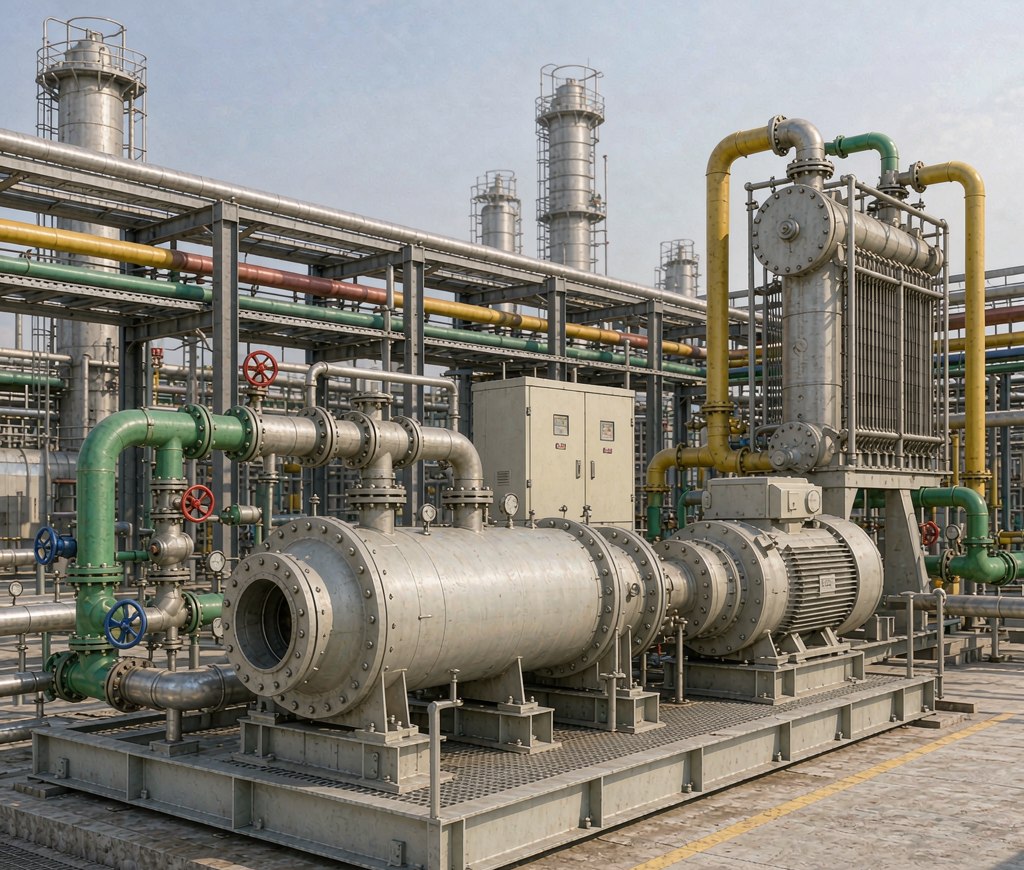
Combined working mode: isothermal compression first raises the tail gas pressure, the dew point moves up with the pressure, the task of the cryogenic section changes from minus tens of degrees to minus a few degrees and then enters cryogenic cooling, and the refrigeration load is significantly reduced; The high-temperature stage circuit of the cascade system cools the low-temperature stage to dissipate heat. The low-temperature stage cools the process gas to the target temperature. After the solvent condenses out, the gas and the condensate enters the tank, the uncondensed gas is discharged or recycled after being checked by adsorption. The refrigerant is matched according to the temperature zone, the low temperature stage selects the working medium that can reach the target temperature, the high temperature stage selects the conventional working medium, and the two stages are coupled with heat exchangers. When the temperature zone is particularly low, the cascade series is added to three levels, and for each additional level, the complexity of the system and the investment are in the next level, and the calculation is sufficient step by step according to the target temperature.
The safety configuration for flammable working conditions shall be based on the list: the system shall be sealed with micro-positive pressure and nitrogen to isolate air infiltration; The explosion-proof type is selected for electricity according to the grade of dangerous area, and the junction box and threading pipe are sealed in place. Interlock the concentration, temperature and pressure, cut off the air intake beyond the limit and start the protection; Leak detection covers key parts such as flanges, valves and heat exchange surfaces. There are three numbers on the operation side: whether the low-temperature evaporation temperature is stable at the target value, whether the condensate output matches the intake concentration, and whether the system pressure difference has abnormal climb-the pressure difference climb is often an early signal of frost on the heat exchange surface or wax component condensation. During maintenance, refrigerant leakage, cleanliness of heat exchange surface and seal state shall be inspected periodically. During shutdown of refrigeration unit, antifreeze and replacement shall be carried out according to regulations.
| Segment | Function | key points |
|---|---|---|
| isothermal compression | Lift the dew point to reduce the cryogenic load | The outlet temperature is connected according to the rear section |
| cascade high temperature stage | Heat dissipation for low temperature grade | Stable operation of conventional working medium |
| cascade low temperature level | Reach the target cryogenic zone | Refrigerant matching by temperature zone |
| gas-liquid separation | Condensate recovery uncondensed gas separation | Linkage between liquid level and drainage |
| Adsorption check | Deep purification of uncondensed gas | Front-end liquid and moisture-proof |
| Safety interlock | Overrun cut off intake | Explosion-proof nitrogen seal leak detection |
Accounting according to the target temperature zone: two levels usually cover most of the cryogenic demand, and the occasions with lower temperature zone or large load are added to three levels.
Look at three signals: low-temperature evaporation temperature deviates from the target, refrigerating capacity drops, and system pressure difference is abnormal; Daily recording of operating parameters, early warning of deviation trend than absolute value, repair welding or replacement of leakage points after leak detection means.
Not absolute: if the boiling point of the components is above the middle, the combination of compression and shallow cooling and film addition may be enough. The low boiling point components that are really out of reach are only put on the cascade cryogenic system. Physical property accounting is done before the route is determined. Don't put on the cryogenic system in one step according to the usual practice.
This article by LuoyangWohong PetrochemicalEquipment Co., Ltd. arranges that the company provides design, manufacturing and operation and maintenance services for condensation recovery, membrane separation recovery and complete solvent recovery devices for chemical and pharmaceutical enterprises. If you need process evaluation or scheme configuration, please contact and exchange.
Mr. Li 13526990215

Hotline





