
The core logic of the condensation membrane separation combined recovery system is "quality treatment and step-by-step reduction": the high concentration section uses compression condensation to convert solvent vapor into liquid for direct recovery, and the low concentration section uses membrane separation to enrich the residual VOCs and recycle them back to the condensation unit. The whole process does not put the burden on a single unit, but lets each unit handle the concentration range it is best at, taking into account the recovery rate and operating economy.
After the exhaust gas from each discharge point of the workshop enters the device through the collection header, it goes through three main units of gas-liquid separation, compression condensation and membrane separation in turn. The liquid solvent produced by the condensation unit enters the recovery liquid system; the enriched gas on the permeation side of the membrane module returns to the inlet of the condensation unit to form an internal circulation; the purified gas is discharged from the end discharge port in an organized manner.
| Unit | Tasks undertaken | Processing Objects |
|---|---|---|
| Collecting pipe networks | Closed collection to prevent escape | Exhaust gas at each emission point |
| compression condensation | High concentration steam liquefaction recovery | high concentration air intake |
| membrane separation | low concentration tail gas enrichment cycle | non-condensable tail gas after condensation |
| Discharge outlet | Standard discharge and monitoring sampling | Purified gas |
Instead of pursuing one-step deep cooling, different condensation temperature ranges are set according to the characteristics of solvent components, so that most solvents are liquefied under normal temperature or shallow cold conditions in the front section, thus reducing deep cooling load and energy consumption.
For the residual components that are difficult to condense, a lower temperature condensation stage is arranged in the latter stage, and the liquefiable part is collected as much as possible to reduce the load of the membrane unit.
Finally, the low-concentration tail gas that cannot be liquefied is handed over to the membrane module, and the enriched gas is refluxed and recondensed. The solvent in the system "only enters but cannot enter", and the recovery rate is guaranteed.
Question: Why not use cryogenic cooling exclusively to achieve even lower temperatures?
Answer: The lower the temperature, the higher the refrigeration energy consumption, and the cost performance. The combination of segmented condensing film ending can achieve good overall recovery effect under reasonable energy consumption.
Q: Do membrane components need to be replaced frequently?
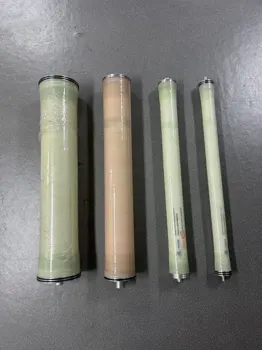
Answer: Under normal working conditions, the membrane module has a long service life and can be included in periodic inspection and maintenance. Wohong provides maintenance and replacement services for membrane modules.
Q: What if there is a concentration shock in the system?
Answer: The device is designed and equipped with buffer and adjustment links according to the upper limit of working conditions, and the short-term concentration shock is absorbed by the system capacity.
LuoyangWohong PetrochemicalEquipment co., LTD., reprint please indicate the source.
Mr. Li 13526990215

Hotline





