
When solvent recovery encounters high boiling point solvents, heat-sensitive materials or scenes that need to reduce the desolvation temperature, atmospheric distillation is often not a good choice: materials may decompose and coke at high temperature, and energy consumption is also large. The idea of vacuum distillation is to reduce the pressure of the system, so that the boiling point of the solvent decreases with the pressure drop, and the solvent can be distilled out at a lower temperature. This is the process principle of vacuum desolvation-exchange vacuum for temperature, exchange temperature for safety and quality.
The boiling point of the liquid is directly related to the pressure of the system: the lower the pressure, the saturated vapor pressure of the same solvent can reach the external pressure at a lower temperature, so boiling evaporation. Vacuum desolvation is to maintain a certain negative pressure in the evaporator, desolvation kettle or distillation tower, cooperate with the heating source, so that the solvent is continuously evaporated at a controlled low temperature, and the evaporated solvent vapor is liquefied and recovered by the condenser. In the whole link, the matching of vacuum system, heating unit and condensing unit determines the desoluble effect.
There are three common application scenarios: first, the recovery and desolvation of high boiling point solvents such as dimethylformamide and dimethyl sulfoxide, the temperature required for normal pressure is too high, and the desolvation temperature obviously decreases after decompression; The second is the treatment of mother liquor containing heat-sensitive components, and low-temperature desolvation avoids material deterioration. The third is the separation and purification of solvent and water, and the relative volatility is changed under reduced pressure to make the separation easier. The dissolved solvent vapor is connected to the condensation recovery unit for liquefaction, and the exhaust gas at the outlet of the vacuum pump is connected to the membrane separation and other purification units to form a complete recovery chain.
| Comparison item | atmospheric distillation | Vacuum distillation |
|---|---|---|
| desoluble temperature | determined by the atmospheric boiling point | Decrease with the decrease of vacuum degree |
| heat sensitive material | Easy to decompose and deteriorate | Low temperature desoluble, quality protected |
| Energy consumption characteristics | Large heating load | Replacement of part of heating load with vacuum energy consumption |
| Exhaust gas destination | Outflow after condensation | Condensation recovery pump end tail gas centralized treatment |
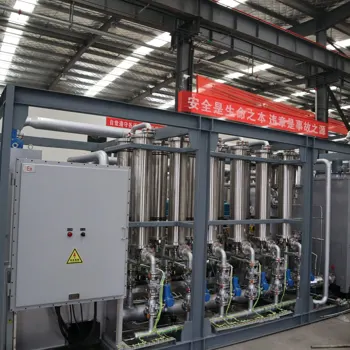
The core equipment of vacuum desolvation system includes vacuum pump group, desolvation kettle or thin film evaporator, condenser and buffer tank. Key points of operation: the vacuum system shall prevent back suction, and the condensate discharge pipeline shall be provided with liquid seal; The heating temperature is adjusted in conjunction with the vacuum degree to avoid over-temperature. The exhaust gas at the outlet of the vacuum pump is collected and treated in a centralized manner to prevent the solvent recovered from dissolving from leaking from the pump end. The device and the condensation recovery unit are designed in a unified way, and the recovery solvent is measured and reused.
No. Excessive vacuum degree requires strict sealing of equipment, the energy consumption of pumping increases, and the condensation back pressure is difficult to match. According to the target desoluble temperature, the required vacuum degree interval can be pushed back and the margin can be left.
No. The tail gas at the outlet of the pump is collected in the recovery system and connected to the condensation or membrane separation unit for treatment, which is also part of the design of the vacuum desolubility scheme.
Most can. It is necessary to check the pressure bearing and sealing capacity of the kettle body, match the vacuum pump unit and the condensing unit, and determine the transformation scope according to the site investigation results.
This article by LuoyangWohong PetrochemicalEquipment Co., Ltd. arranges that the company provides design, manufacturing and operation and maintenance services for condensation recovery, membrane separation recovery and complete solvent recovery devices for chemical and pharmaceutical enterprises. If you need process evaluation or scheme configuration, please contact and exchange.
Mr. Li 13526990215

Hotline





