
The design and operation adjustment of the condensation recovery device cannot avoid a problem: how much is the appropriate condensation temperature. If it is set high, the components that should be collected cannot be collected, and the recovery rate does not meet the standard. When it is set low, the consumption of cold energy will rise sharply, the frost on the heat exchange surface will accelerate, and the operating cost will go up. The value of temperature level should find a balance between recovery rate and energy consumption. To find this balance point, it is necessary to understand the relationship between dew point, concentration and recovery rate.
The temperature at which the solvent vapor in the mixed gas begins to condense is the dew point, which is determined by the partial pressure of the component in the gas phase, which in turn is determined by the concentration. The higher the concentration of the intake air, the higher the dew point, the easier it is to condense; the lower the concentration, the lower the dew point, and the lower the temperature is required to condense.
This is why the same device has a good recovery effect when the intake air concentration is high, and the effect drops immediately after the concentration is diluted-the gas phase conditions change, and the condensation ratio corresponding to the same temperature level is completely different.
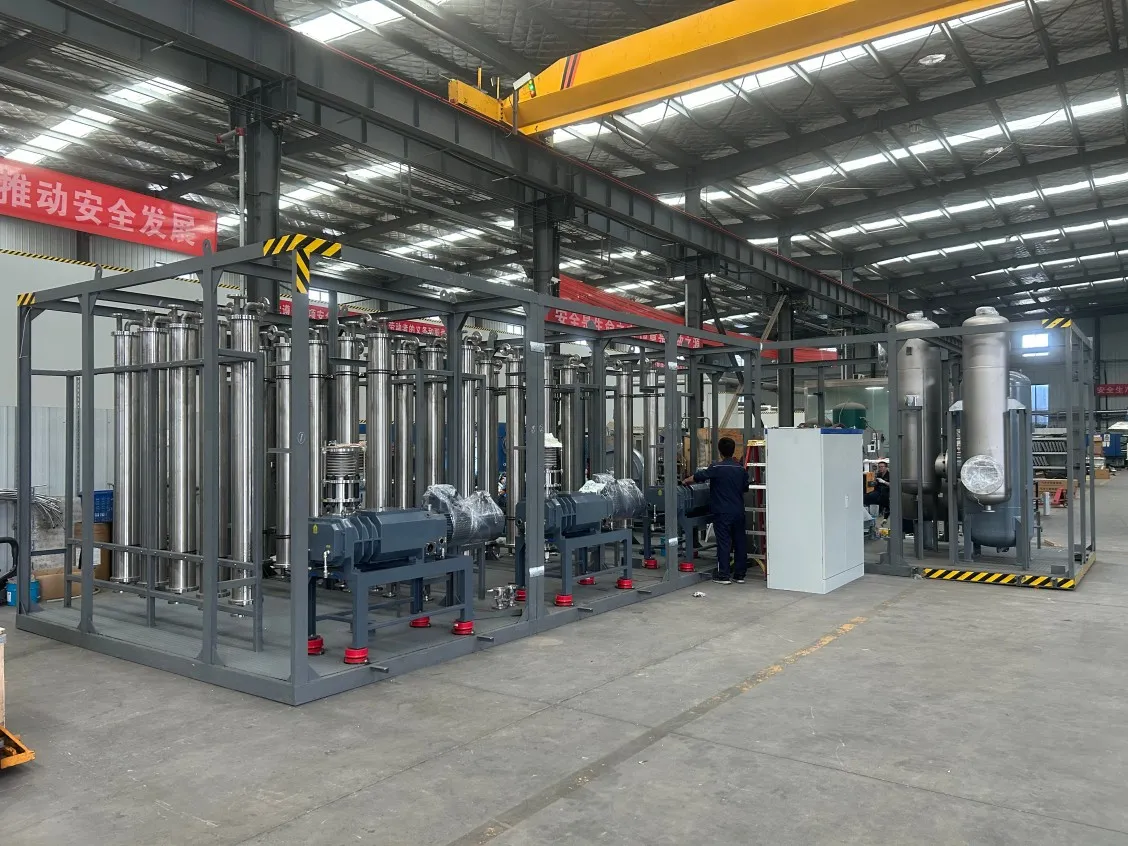
The condensation temperature decreases from the dew point and the recovery rate increases; however, the increase is not linear, and the lower it goes, the smaller the increase in recovery rate per degree of decrease, while the consumption of cold energy increases almost proportionally. The economic interval of the temperature level is at the position where the curve changes from steeply to slowly: if the temperature drops further down, the amount of cold spent cannot be exchanged for much incremental recovery.
This equilibrium point varies with intake conditions. High concentration conditions, the equilibrium point at a higher temperature; low concentration conditions, to achieve the same recovery rate must be more deep cold, energy consumption costs. Judging whether a low-concentration airflow value is worth deep cooling is to calculate this account.
In addition to the theoretical value, there are several operating factors to take into account the margin: the heat transfer capacity of the heat exchange surface decreases after frosting, and the actual condensation ratio at the same temperature level is lower than the clean state; The cooling water temperature fluctuates with the season, and the allowance for the heat exchange temperature difference in summer should be sufficient. When the load fluctuates, the response speed of the low temperature section cannot keep up with the change of air volume.
| Considerations | Influence direction | Value processing |
|---|---|---|
| Intake air concentration | Low concentration means low dew point | Low concentration air flow first check whether deep cooling is economical or not |
| Recovery requirements | If the requirement is high, the temperature level is deep. | Stop deepening at the gentle section of the curve |
| Cold consumption | The deeper the temperature level, the greater the energy consumption. | Comparing Incremental Recycling with Incremental Energy Consumption |
| state of heat exchange surface | Frost Decreased Efficiency | Make allowance and clean up by cycle |
| Seasonal water temperature | Summer heat transfer temperature difference narrowed | Checking according to the most unfavorable season |
| Load fluctuation | Response lag | Working conditions with large fluctuation have more temperature retention margin |
Therefore, the actual temperature level is usually lower than the theoretical equilibrium point, but how much lower depends on the heat exchange margin and load stability of the device. The device with large heat exchange margin leaves less margin, and the load fluctuation is more.
The design value corresponds to the design intake condition. When the actual concentration and moisture content are different from the design, the temperature level shall be rechecked and adjusted according to the actual conditions, and the establishment of the corresponding relationship between the temperature level and the recovery rate at the initial stage of operation is the basis.
The concentration decreases the dew point, and the condensation ratio decreases at the same temperature level. This is also the reason why the collection system should avoid large air volume dilution, and the collection concentration determines the recovery economy.
According to the boiling range of the components, it is distributed from high to low: the high temperature level receives the high boiling point component, and the low temperature level receives the light component. The temperature difference of each level is divided according to the component condensation interval to avoid excessive load in the low temperature section.
This article by LuoyangWohong PetrochemicalEquipment Co., Ltd. arranges that the company provides design, manufacturing and operation and maintenance services for condensation recovery, membrane separation recovery and complete solvent recovery devices for chemical and pharmaceutical enterprises. If you need process evaluation or scheme configuration, please contact and exchange.
Mr. Li 13526990215

Hotline





