
The low temperature section of the condensation recovery device works in the sub-zero temperature zone, the water vapor and part of the solvent in the incoming gas will frost on the heat exchange surface, the heat transfer capacity will decrease after the frost layer is thickened, and the recovery rate will follow the decline. Frost itself is not a fault, it is the normal operation of such devices. The problem lies in frost management: when, how and whether the frost can be made slower.
The most direct indicators to judge the frost state are the pressure difference and the outlet temperature in the low temperature section: the continuous increase of the pressure difference indicates that the flow channel is narrowed, and the higher the outlet temperature indicates that the heat exchange capacity is reduced. If the two indicators are matched, the pressure difference rises obviously or the outlet temperature deviates from the set value, it is time to arrange defrosting.
When the frost layer is unevenly distributed, local blockage is more troublesome than overall thickening, and the pressure difference will jump quickly in a short time. The determination of defrosting cycle should leave a margin, and the top grid should be reprocessed without differential pressure.
It is the simplest to stop the machine and defrost naturally. After the device is stopped, the ambient temperature will warm up, which takes the longest time and is suitable for arrangement between shifts. The hot gas defrosting uses the compressed hot gas flow to blow back the heat exchange surface at a faster speed, and attention should be paid to the sealing of the switching valve of the back-blowing gas path. The electric heating defrosting is equipped with electric heating on the heat exchange surface, which is convenient to control and has high energy consumption. The three methods are selected according to the size of the device and the shutdown window, and can also be used in combination.
| defrosting way | Features | Applicable occasions |
|---|---|---|
| Stop natural defrosting | Simple and time-consuming | Unit that can be shut down between shifts |
| Hot gas blowback | Fast speed, switching valve required | Continuous operation device with tight defrosting window |
| electrothermal defrosting | Convenient control and high energy consumption | Where the degree of automation is high |
| Combination method | Daily naturalization | Regular treatment of local frost with hot air |
| defrosting water discharge | Anti-drain freezing | During defrosting, specially-assigned person shall confirm the smoothness |
| Precool section maintenance | Condensate discharge | Base item for all cryogenic configurations |
The defrosting water and condensate produced by defrosting should be collected and discharged centrally. The drainage point in the low temperature section should be kept unobstructed during the defrosting period. The most common secondary problem in the defrosting process is that the defrosting water freezes and blocks the drainage outlet.
The timing of defrosting is also very important: it is arranged between batch switching and oven shutdown, with the minimum loss of recovery; Although the management of defrosting by fixed shift is simple, it may collided with the production peak. It is a common practice to consider the defrosting arrangement together with the scheduling plan to reduce losses in continuous operation of the plant.
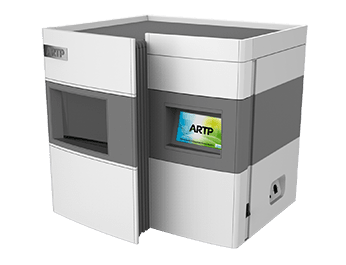
The key to prevent frosting is on the gas side: the higher the moisture content of the gas, the faster the frost layer grows. The collection pipeline avoids confluently with the high moisture source. Most of the water vapor is condensed at the higher temperature in the pre-cooling section, and the frost formation rate in the low temperature section will be obviously slowed down. The condensate discharge of the pre-cooling section shall be included in the daily inspection. The accumulation of condensate will cause the pre-cooling to fail and the burden of the low-temperature section will be increased immediately.
The defrosting cycle is also related to the load: the frost layer of the device running continuously at full load grows quickly, and the device running intermittently can use the shutdown period to defrost naturally, and the defrosting arrangement is coordinated with the production rhythm.
Moisture content of incoming gas increases: upstream process changes, pipeline condensate entrainment or pre-cooling section failure. Check the condensate discharge in the pre-cooling section and the humidity at the source of the incoming gas, and then evaluate the defrosting arrangement.
Frost is inevitable when running in the sub-zero temperature zone. What can be done is to make the frost slow and smooth. If the incoming air is dehumidified in place, the defrosting interval can be lengthened a lot, and no frost requires complicated pretreatment, which is usually not cost-effective.
The configuration of two low-temperature sections running in turn can be switched during defrosting without interruption of recovery. A single device arranges defrosting in a period of low load, and the recovery rate fluctuates within the allowable range in a short time.
This article by LuoyangWohong PetrochemicalEquipment Co., Ltd. arranges that the company provides design, manufacturing and operation and maintenance services for condensation recovery, membrane separation recovery and complete solvent recovery devices for chemical and pharmaceutical enterprises. If you need process evaluation or scheme configuration, please contact and exchange.
Mr. Li 13526990215

Hotline





