
The condensing unit is the core equipment of the solvent recovery unit: whether the recovery temperature can be achieved stably or not is directly determined by the state of the condensing unit. Once the unit decays, the recovery rate will decrease in light, and the emission will exceed the standard in heavy. The maintenance of the condensing unit is carried out around three lines: refrigerant system, heat exchanger and operation parameter trend. All three pipes are in place, so that the long-term operation of the unit can have a bottom.
Most of the faults of condensing units are precursory: slight leakage of refrigerant, frost and thickening of heat exchanger, and deterioration of oil circuit are all slow development. If the parameter trend management is done on a daily basis, the unit maintenance can be arranged in the planning window instead of being forced to repair by car jump.
Refrigerant charging amount and system airtightness are the basis: suction and exhaust pressure, superheat degree and supercooling degree are recorded according to shifts, and leakage is checked upon parameter deviation-electronic leakage detection is combined with soapy water, and joints, valves and shaft seals are high-incidence parts. The slight leakage is not treated, the refrigerant is gradually lost, and the temperature level is slowly rising, which often affects the recovery effect for several months when it is found. Before replenishing the refrigerant, find the leakage point and make up for it. Only replenishing but not checking the leakage is equal to only adding water but not repairing the pipe.
Refrigerated oil shall be tested periodically: oil change shall be arranged when the oil color is deep and the acid value rises, and the oil filter shall be replaced according to the pressure difference. The operating current and exhaust temperature of the compressor are included in the trend management. The current increases under the same temperature level, indicating that the compressor efficiency is decreasing, and the maintenance and verification are arranged.
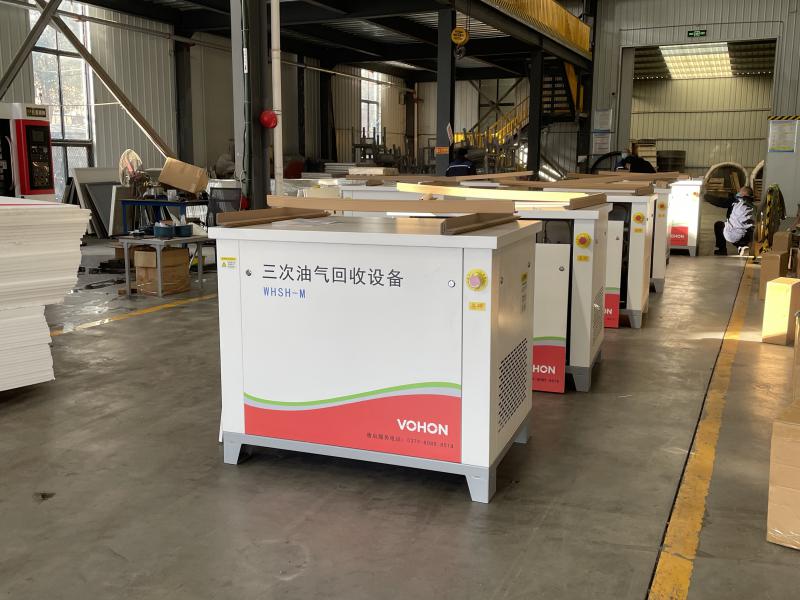
Frosting of low-temperature evaporator is a direct threat to the standard temperature level: frost layer thickens, heat transfer resistance rises, and evaporation temperature does not go up. The defrosting method is determined according to the unit configuration-hot gas defrosting and electric defrosting have their own advantages and disadvantages. The defrosting period is determined according to the deviation of frost layer thickness and temperature level, not according to the fixed time. The defrosting drainage channel is kept unblocked, and poor drainage will freeze the defrosting water in the heat exchanger, causing secondary problems.
The condensing side is also required: the dirty blocking of the fins of the air-cooled condenser and the fouling of the water side of the water-cooled condenser will increase the condensing pressure and decrease the efficiency of the unit. The fins are cleaned quarterly, and the water side judges the cleaning cycle according to the water quality and temperature difference. The maintenance of the condensation end is as important as the evaporation end.
The operation difference between winter and summer should be arranged in advance: the refrigerant pressure and defrosting behavior change in low temperature environment, and the winter operation mode of the unit is switched according to the temperature; In summer, the ambient temperature is high, the heat load at the condensing end is increased, and the cleaning cycle is appropriately advanced. Seasonal switching checklist, the unit in the transition period of the two seasons does not drop the chain.
| Phenomenon | Common causes | Handling method |
|---|---|---|
| Temperature level slowly raised | Refrigerant micro-leakage | Refrigerant replenishment after leak detection and repair |
| Evaporation temperature does not go up | frost layer is too thick | Trigger defrost by thickness |
| High condensation pressure | Dirty or scale on fins | Clean the heat exchange end quarterly |
| Increased compressor current | Decreased efficiency | Arrange overhaul verification |
| Oil-colored deep hair | oil quality deterioration | Oil change according to status |
| Defrosting and poor drainage | Frozen blocking of drainage channel | With the inspection with antifreeze |
When the system is airtight, there is no need to replenish the refrigerant regularly, and the pressure parameter is stable and normal. Units that need frequent replenishment must have leaks. Focus on leak detection and do not form the habit of replenishing leaks on schedule.
Look at two numbers: the deviation of the evaporation temperature from the set value and the visual thickness of the frost layer. If the deviation exceeds the threshold or the frost layer affects the air duct water flow, defrost it. Fixed cycles are only suitable for reference.
First do the ability check and state assessment: compressor efficiency, heat exchanger state, control system life one by one. Most units can be restored to close to the design level through overhaul and component renewal, and the overall renewal is only considered when the main body life expires.
This article by LuoyangWohong PetrochemicalEquipment Co., Ltd. arranges that the company provides design, manufacturing and operation and maintenance services for condensation recovery, membrane separation recovery and complete solvent recovery devices for chemical and pharmaceutical enterprises. If you need process evaluation or scheme configuration, please contact and exchange.
Mr. Li 13526990215

Hotline





