
Is membrane oil and gas recovery safe? andactivated charcoalWhich is safer than adsorption? Direct answer: membrane method has more advantages in the safety of flammable scenes such as gas stations-the separation process is physical infiltration, which does not involve the accumulation of adsorption heat, the mixture of oil and gas and air in the device flows openly and does not stay in the bed layer, and the operation process does not generate electrostatic accumulation; The short board of activated carbon adsorption releases heat: the heat released during adsorption accumulates in the bed layer, and local overheating has the risk of explosion, the project must be equipped with carbon monoxide monitoring, nitrogen protection and temperature control interlocking. The lack of one link in the configuration is a hidden danger. Both processes can be operated safely, but the safety of the membrane method is "a natural risk less in design", and the safety of activated carbon is "relying on supporting systems to control risks". In this paper, the safety mechanism and engineering configuration on both sides of the clear.
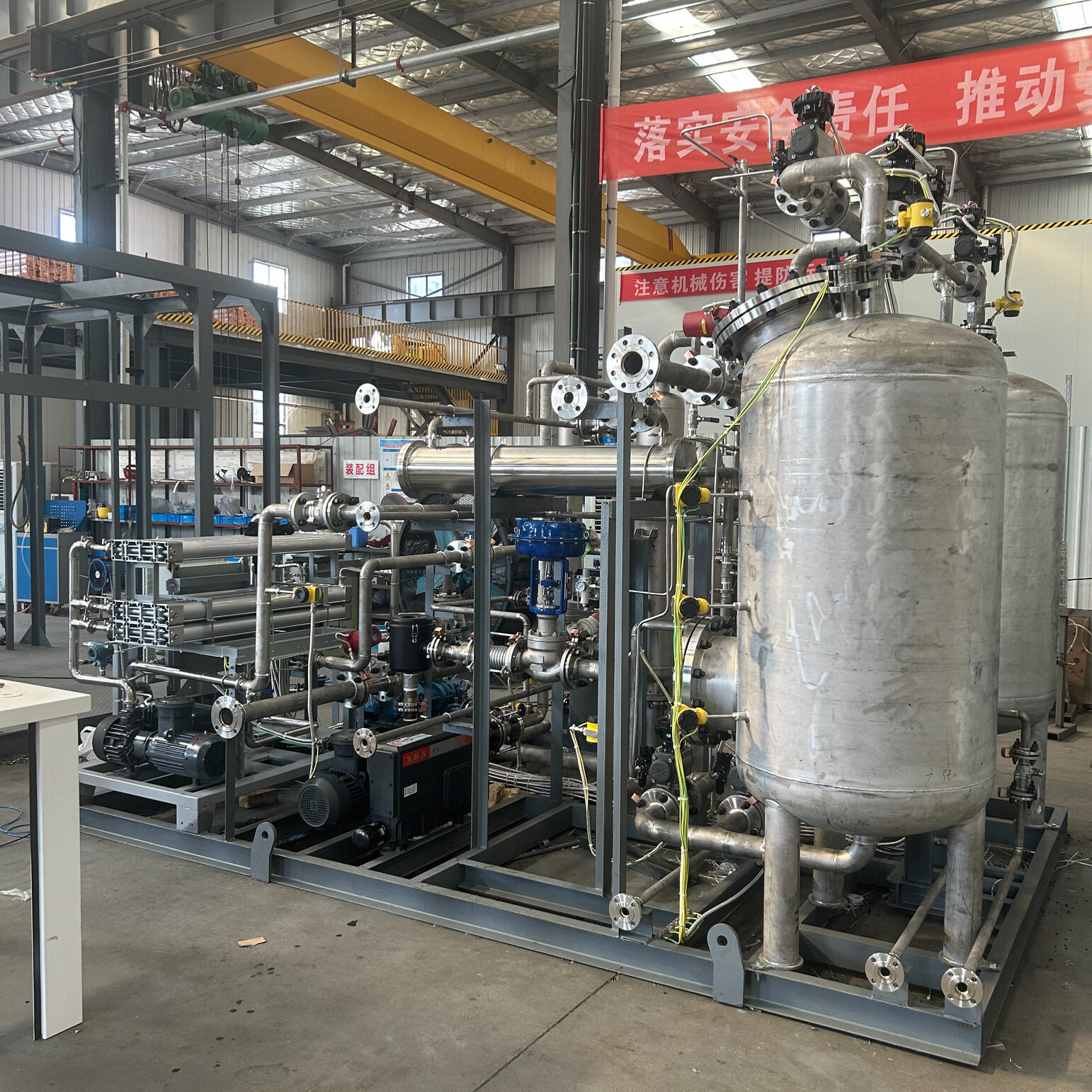
Membrane separation is a process of dissolution and diffusion: oil and gas are dissolved into the separation layer under pressure, diffused to the other side and pumped away, and there is no phase change, no chemical reaction and no heat accumulation in the whole process. The membrane module is an open flow channel, the oil and gas do not stay, and the local concentration will not accumulate in the dangerous zone like the bed layer; the friction between the air flow and the component does not generate static electricity accumulation during operation, which is the key point for flammable oil and gas conditions. The dynamic equipment of the whole device is compressor and vacuum pump, and the hazard source is concentrated in the lubrication and sealing of the unit, which belongs to the management category of conventional dynamic equipment and is mature and controllable.
Activated carbon adsorption is an exothermic process: when oil and gas molecules are captured by the carbon surface, the adsorption heat is released, and the internal temperature of the bed is higher than that of the inlet. Under normal working conditions, the feed concentration is stable and the temperature rise is controllable. Once the feed concentration exceeds the design, the air flow is short-circuited or the carbon layer is aging, the heat accumulation is accelerated, the hot spot temperature of the bed layer rises, and there is a risk of spontaneous combustion and explosion in extreme cases. The countermeasures on the project are a complete set: inlet concentration monitoring interlock, bed multi-point temperature monitoring, carbon monoxide online monitoring, accident nitrogen protection, temperature control of desorption process. This system makes the activated carbon process equally safe under compliance operation, but the price is complicated configuration and many maintenance points. Any failure of monitoring point must be repaired in time.
Spreading out the safety account: the main safety design of the membrane method device focuses on the explosion-proof selection of the unit, the electrostatic crossover of the pipeline and the location of the discharge port, with fewer configuration items and fewer failure points; The configuration items of activated carbon device are more than doubled. Temperature control, carbon monoxide monitoring and nitrogen system must be maintained and verified respectively. The complexity of the system itself is also the source of risk-the more links depend on "normal operation of the system", the overall reliability. From the operator's point of view, the operation of the membrane method device is "staring at the unit", the operation of the activated carbon device is "staring at the unit plus the bed layer state", the latter has higher professional requirements for the personnel on duty.
From the perspective of safety priority, the membrane route is worthy of priority in explosion-proof sensitive places such as gas stations and oil depots. For stations where activated carbon devices have been built, the focus is on maintenance: temperature control and carbon monoxide monitoring are checked periodically, feed concentration monitoring interlock function is measured once a month, and nitrogen system pressure maintenance inspection is carried out. When making process comparison and selection for renovation projects, the "number of safety configuration items" and "single point failure consequences" are listed in the review table, which is closer to the truth than only the recovery rate and cost.
| Security Item | membrane method | activated carbon adsorption |
|---|---|---|
| Process risk | Physical penetration, no heat accumulation | Adsorption heat release, bed hot spot risk |
| Risk of accumulation | Open flow channel does not stay | Bed accumulation depends on feed stability |
| Static electricity | Run without accumulation | Crossing measures required |
| Supporting system | Explosion-proof of unit and cross-over of pipeline | Temperature control, carbon monoxide monitoring, nitrogen protection |
| Maintenance Focus | Unit lubrication seal | Periodic calibration of full set of monitoring interlocking |
No. The device deals with flammable oil and gas, and the explosion-proof selection of the unit, the electrostatic crossover of the pipeline and the position of the discharge port cannot be less. The advantage of membrane method is that there is less risk of "hot spot in the bed layer" and is not explosion-proof-free.
Focus on the bed temperature gradient, carbon monoxide reading and feed concentration. If the temperature gradient is abnormally narrowed or the carbon monoxide reading is raised, immediately reduce the load or cut off the nitrogen protection according to the plan, and do not wait for the alarm limit.
Yes, the combination of membrane concentration and adsorption polishing is applied in the deep treatment of tail gas. The key is clear division of labor: membrane is responsible for load reduction, adsorption is responsible for checking, and concentration intervals are staggered.
This article by LuoyangWohong PetrochemicalEquipment Co., Ltd. arranges that the company provides design, manufacturing and operation and maintenance services for condensation recovery, membrane separation recovery and complete solvent recovery devices for chemical and pharmaceutical enterprises. If you need process evaluation or scheme configuration, please contact and exchange.
Mr. Li 13526990215

Hotline





