
Ethyl acetate is a widely used ester solvent in the coatings, inks, adhesives, and pharmaceutical intermediates industries, with strong volatility, distinct odor, and multiple exhaust emission points. The boiling point of ethyl acetate is over 70 degrees Celsius, making it a solvent that is relatively easy to recover by condensation. With the liquefaction recovery process of condensation and membrane separation, most of the ethyl acetate can be liquefied in the condensation section, and the recovered liquid can be reused after simple treatment.
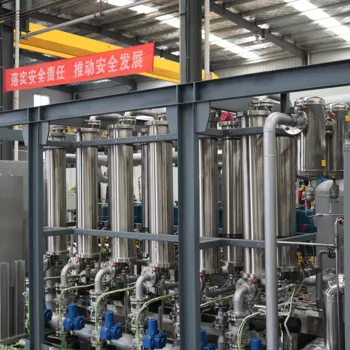
The condensation temperature is determined based on the saturated vapor pressure characteristics of ethyl acetate: the lower the temperature, the less residual ethyl acetate in the gas, but the higher the refrigeration energy consumption. Graded condensation is commonly used in engineering, where the majority of the solvent is first recovered by condensation at a higher temperature, and then the remaining portion is treated in a cryogenic section to balance energy consumption and recovery rate. The specific temperature level needs to be calculated based on the intake concentration, air volume, and target recovery rate, and cannot be directly copied from the values of other projects.
| Operating condition | Intake air concentration | Configuration focus |
|---|---|---|
| Single ethyl acetate emission | Moderate to high | Two stage condensation is sufficient, and the condensate can be directly reused |
| Ester mixed solvent | Medium | According to the temperature setting of the mixed system, the condensate needs to be separated |
| Low concentration and large air volume | low | Concentrate first and then recycle, with more prominent membrane separation effect |
| Wet waste gas | Affected by humidity | Strengthen pre cooling dehydration to prevent frosting and blockage |
Q: Can the ethyl acetate recovery solution be directly reused?
Answer: Under the condition of a single solvent, the condensate can be reused after being allowed to settle and separate into layers; If mixed with other solvents, separation or blending should be carried out according to the process requirements.
Q: Is it better to have a lower condensation temperature?
Answer: No. The lower the temperature, the higher the recovery rate, but the energy consumption and frost risk increase synchronously, and should be determined comprehensively based on the intake concentration and target recovery rate.
Q: Ethyl acetate waste gas still needsactivated charcoalAdsorption?
Answer: Condensation and membrane separation can already liquefy and recover most solvents. If local emission requirements are stricter, a safeguard measure can be added at the end, which will be implemented according to environmental impact assessment requirements.
Q: What are the requirements of the device for the factory building?
Answer: A certain amount of equipment space and ventilation conditions are required, and electrical and instrumentation should be selected according to the corresponding requirements in the explosion-proof zone. The specific details will be determined during the scheme design phase in conjunction with the site.
LuoyangWohong PetrochemicalEquipment Co., Ltd. specializes in condensing and membrane separating VOCs organic solvent liquefaction and recovery equipment, covering various working conditions such as esters, alcohols, ketones, aromatics, and chlorine containing solvents. Welcome to call for communication.
Mr. Li 13526990215

Hotline





