
Acetone is a commonly used ketone solvent in coating, medicine, electronic cleaning and other industries, with moderate boiling point, strong volatility, high concentration of waste gas and obvious recovery value. The acetone waste gas recovery adopts the liquefaction recovery process of condensation and membrane separation: the condensation section liquefies most of the acetone vapor for direct reuse, and the membrane separation section intercepts the residual vapor and forms an internal circulation to purify the tail gas for external discharge. The whole device has good adaptability to intermittent and fluctuating working conditions, and is suitable for the workshop with acetone as the main solvent.
The boiling point of acetone is around 56 degrees Celsius, which is easier to volatilize than most esters and aromatic solvents, and the vapor pressure is high at room temperature, which means that the enthalpy load of acetone exhaust gas is greater at the same concentration, and the temperature required for the condensation section is lower. Special attention should be paid to two points in the recovery design: first, acetone is miscible with water, and if water vapor condensate is entrained in the condensate, subsequent separation methods should be considered; Second, the flash point of acetone is low, and the anti-static and safety configuration of the device should be in place.
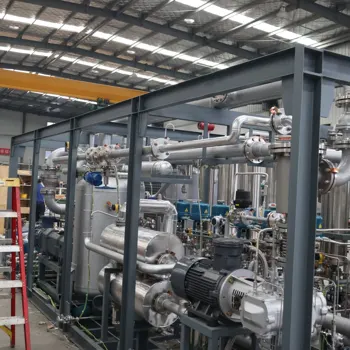
The condensing section bears the main recovery load, and the acetone is directly reused after liquefaction; the residual low-concentration acetone vapor enters the membrane separation section, the membrane module selectively permeates the organic vapor, and the enrichment side returns to the front end for recondensation. This internal circulation design makes the overall recovery degree of the system significantly better than that of single condensation, and the tail gas concentration is more stable.
| Comparison item | Single condensate recovery | condensation membrane separation coupling |
|---|---|---|
| Applicable air source | High and stable acetone concentration | Concentration fluctuation, including low concentration residue |
| Exhaust effect | Limited by condensation temperature level | Internal circulation fine collection, purification more thoroughly |
| Reuse acetone | Direct Liquefaction Reuse | Liquefied Reuse Residual Interception |
| Security Configuration | Configuration by low flash point solvent | Same configuration, no open flame risk on membrane side |
After the device is put into operation, the three indicators of condensation outlet temperature, pre-membrane pressure and recovery amount are paid attention to daily. Acetone is volatile, and the breathing loss of storage tank and pipeline cannot be ignored. It is recommended to connect the breathing exhaust to the recovery system. Solvent ledger and recovery measurement linkage, monthly check solvent consumption, recovery effect with data.
It will affect the selection of condensation temperature and the separation of condensate. The latent heat load is calculated according to the humidity of the air source during the design. The separation link is set for the condensate, and the moisture content of the reuse acetone is controllable.
Applicable. The concentration of acetone in the tail gas of the cleaning process is relatively high and the gas volume is not large, which can be covered by a small condensation and membrane separation skid-mounted device, and the recovered acetone can be reused for cleaning.
The purity of acetone recovered by condensation is usually good, which is checked and confirmed according to the workshop reuse standard. For scenes with high purity requirements, distillation purification can be added.
This article by LuoyangWohong PetrochemicalEquipment Co., Ltd. arranges that the company provides design, manufacturing and operation and maintenance services for condensation recovery, membrane separation recovery and complete solvent recovery devices for chemical and pharmaceutical enterprises. If you need process evaluation or scheme configuration, please contact and exchange.
Mr. Li 13526990215

Hotline





