
Toluene is the coating, ink and resin industry, the amount of aromatic solvents, boiling point of about 110 ℃, and water immiscible. These two properties make the toluene recovery route obviously different from alcohol and ketone: the condensation temperature does not need to be pressed very low, the condensate can be stratified after standing, and the dehydration link saves a set of rectification compared with water-soluble solvents. The allocation phase makes full use of these inherent advantages, and the operating costs have obvious advantages.
Toluene recovery should focus on the other side: the flash point and explosion characteristics of aromatic hydrocarbon solvents and the limit values of environmental protection emissions are relatively strict. The tightness of collection and the reliability of post-stage control determine whether the device can meet the standard stably for a long time.
The saturated vapor pressure of toluene is not high in common solvents. When the inlet concentration is high, most of the solvent can be recovered by primary condensation, and the temperature can be met in the frozen water range. Under low concentration conditions, series adsorption checks are performed after condensation, and the device is configured according to concentration split. The inherent advantages of layered dehydration play a role here: the condensate is placed in the layered tank, the toluene phase is automatically separated from the aqueous phase, and the toluene phase is directly used after filtration and detection, thus saving the investment and energy consumption of distillation dehydration.
The collection system is divided according to the concentration: the high concentration point is connected into the condensation section separately, and the low concentration main pipe is connected into the check section. The density of toluene is higher than that of water and slightly soluble in water. The water phase of the stratified tank contains a small amount of dissolved toluene, which is discharged into the sewage system and measured regularly to prevent the dissolution loss from being outside the account.
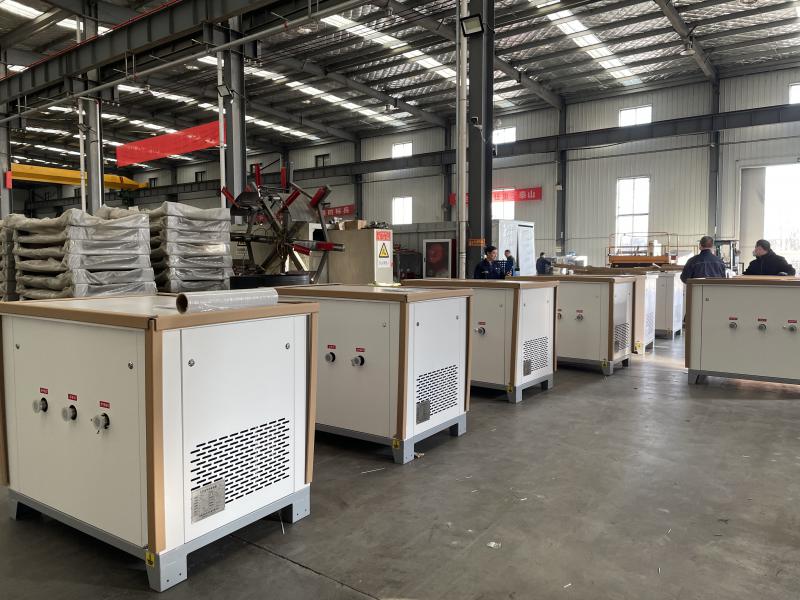
The operation points of stratification tank are time and temperature: the standing time is calculated according to the amount of condensate and tank capacity, and the stratification can be clear in usually tens of minutes; In winter, the temperature of condensate is low, the viscosity is high, the stratification speed is slow, and the tank area is kept warm or the standing time is appropriately prolonged. The position of the interface shall be checked regularly, and the reason for the abnormality of oil on the drainage side shall be found in time-mostly emulsification, and the root cause of emulsification is often mixed with incoming air and cleaning water.
Reduce emulsification from the source: pre-cooling dehumidification collects water vapor first, and solvent-containing wastewater from cleaning operations is collected separately and does not mix with condensate system. There is a ledger for the whereabouts of the water phase, and there is a test for the reuse of the solvent phase. Only when the two accounts are matched can the material balance of the recovery rate be leveled.
The storage and turnover of recovered toluene are also arranged: the toluene phase tank is transferred to the storage tank after batch detection, and the respiratory discharge of the storage tank is connected to the recovery system, so that the storage link is not allowed to become a new discharge point. The turnover schedule is linked to the production plan. The recovered liquid is reused according to batches and will be determined after overdue re-inspection. Quality management runs through the last link of reuse.
| Segment | Features | Configuration Schedule |
|---|---|---|
| High concentration point | high concentration | Primary Condensate Priority Recovery |
| Low concentration main pipe | Low concentration and large air volume | Condensation and Adsorption Series |
| Layered tank | Automatic stratification of condensate | Record the standing time by shift |
| toluene phase | Reuse after filtration | Batch-by-batch testing of blending |
| Aqueous phase | Dissolve a small amount of toluene | Separate metering of sewage |
| Pre-cooling section | Reduce emulsification | Condensate drain |
According to the requirements of the coating system, the purity of most ingredients is required to be above 99%, and the moisture is controlled in a few thousandths. The recovery liquid with stratification and filtration can usually be directly satisfied, and mixed after batch detection, which is consistent with the incoming material index system.
First check the source of emulsification: too much water in the incoming air, mixed flow of cleaning water and insufficient standing time all cause oil in the drainage area. Source separation plus prolonged standing can mostly be solved, and repeated demulsification or reflux re-separation links.
Look at the air volume and concentration: the air volume is not very usefulactivated charcoalAdsorption, investment and operation are simple; large air volume and concentration fluctuations, the combination of membrane separation and adsorption is more stable. Calculate accounts according to working conditions, not according to new and old equipment.
This article by LuoyangWohong PetrochemicalEquipment Co., Ltd. arranges that the company provides design, manufacturing and operation and maintenance services for condensation recovery, membrane separation recovery and complete solvent recovery devices for chemical and pharmaceutical enterprises. If you need process evaluation or scheme configuration, please contact and exchange.
Mr. Li 13526990215

Hotline





