
How to prevent polymerization in exhaust gas recovery containing ketone esters? Direct answer: The core of anti polymerization is temperature control and oxygen isolation - ketones and esters tend to self polymerize at high temperatures, and the polymerization productsactivated charcoalPore blockage, adhesive buildup on the heat exchange surface, and gradual failure of the entire system; The control method is to set the desorption temperature according to the solvent properties, protect and isolate oxygen with nitrogen gas, and cut off the heating interlock in case of abnormal heating. Aggregation damage is mostly irreversible, and the cost-effectiveness of prevention is much higher than post cleaning. This article explains the risk points, temperature grading, and interlocking logic.
The aggregation risk is concentrated in two areas: local oxidation heat release in the adsorption bed and high temperature zone in the desorption regeneration section. After the adsorption of ketone ester components by activated carbon, the bed layer experiences a temperature rise under specific conditions, which accelerates oxidation and releases heat to push up the temperature. Once the positive cycle is started, the carbon layer will become gelatinous and inactive, and in severe cases, the bed layer will spontaneously ignite at a hot spot. The temperature setting in the desorption section is too high, and the solvent decomposes and polymerizes in the carbon pores, which also blocks the pores. To determine if there are such risks on site, look for three signs: abnormal bed temperature rise rate, burnt smell in the desorption air, and gradual increase in system resistance. If any of these signs appear, they should be treated as signs of aggregation.
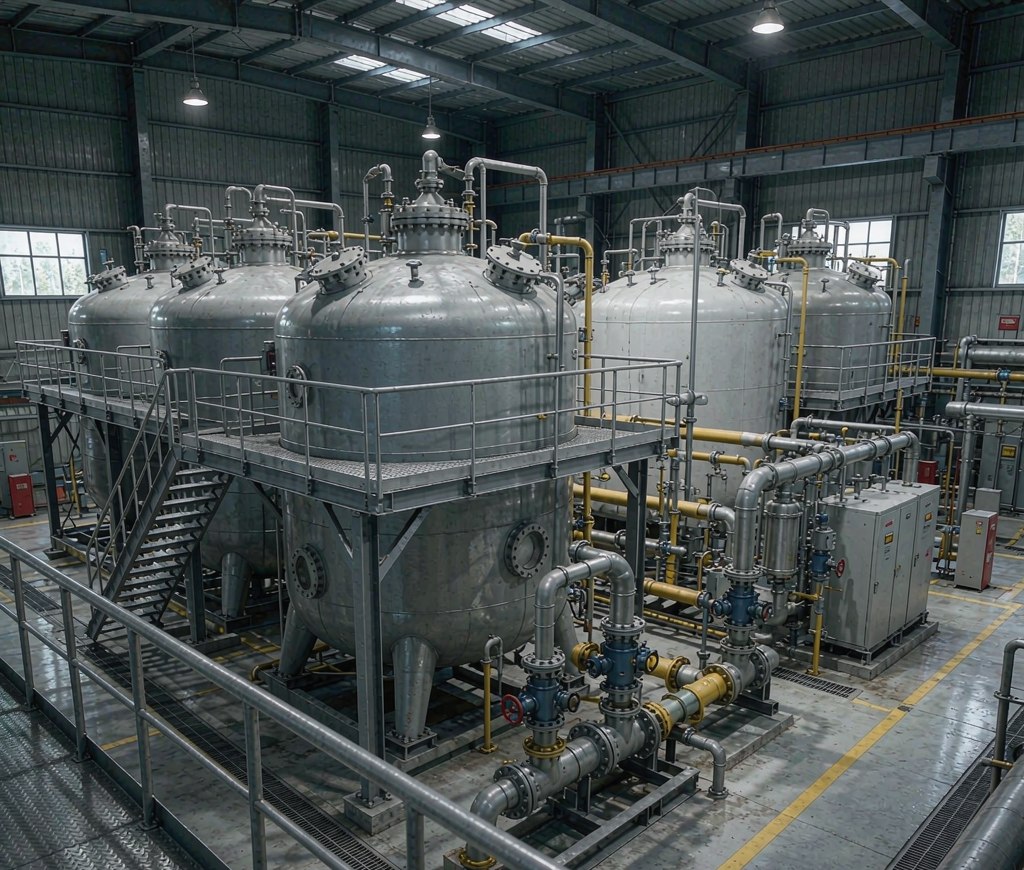
The basis for temperature classification is the physical properties of the solvent: for ketone esters with strong thermal sensitivity, the desorption temperature should be pressed according to the upper limit of the physical properties, and the lower limit temperature that can complete the desorption should be taken, instead of the conventional value of one size fits all; Ordinary solvents should be set within the regular range, and recalculated when changing varieties. Do not use the old parameters. The hardware backbone of temperature control is two-tier: the controller outputs according to the set curve, the over temperature protection is independent of the controller and directly cuts off the heat source, and different sensors are used in the two stages to avoid single point failure. The heating rate should also be limited: uniform heating is safer than rapid topping, but topping can easily cause local overheating. The acceleration rate is limited in the program.
The function of nitrogen protection is to isolate oxygen: during the desorption stage, nitrogen is used as a blowing medium to replace oxygen in the bed and cut off the oxidation pathway; During parking, maintain a slight positive pressure with nitrogen seal to prevent air from seeping into the bed. The interlocking logic is reset in three ways: the bed temperature rise rate exceeds the limit alarm and reduces the heat source, the absolute temperature value exceeds the limit and cuts off the heat source and starts nitrogen replenishment, and the abnormal situation continues to be executed according to the parking program. Interlocking requires independent power supply and independent sensors, as well as physical isolation from the control system, to ensure effective protection in case of control system failure. After the interlocking action, the cause must be identified before resetting, and do not reset forcefully with a fault.
Daily monitoring of four parameters: bed temperature distribution (comparing multiple points to find hotspots), desorption gas temperature and composition, system pressure difference trend, nitrogen flow rate and purity record. Hot spots in the bed layer are discovered through regular or distributed temperature measurements, and the location of the hot spot often indicates local blockage or oxidation initiation. The change in the composition of desorption gas is an early signal: normal desorption gas is mainly composed of the target solvent, and the appearance of decomposition products indicates that there is a problem with the temperature path or residence time. The pressure difference trend is a lagged but reliable indicator of aggregation, slowly climbing to check the bed state. Summarizing four numbers each month for trend review is more effective in identifying issues in advance than conducting a single inspection.
For the gummed bed, the disposal is graded according to the degree: for mild gumming, try to improve nitrogen purging and targeted cleaning, and observe pressure difference and desorption recovery; If carbon exchange is arranged above moderate level, the glue will continuously release acidic or oxidizing substances, and the new carbon will not live for long. The jelly on the heat exchange surface shall be treated according to the cleaning procedure, and the cleaning agent shall be selected as the non-corrosive variety of the material. After disposal, the temperature setting and interlocking record shall be repeated, and the root cause shall be corrected to the parameter. The same problem shall not be carried by repeated carbon replacement.
| Risk level | polymerization inducement | Monitoring means | prevention and control means |
|---|---|---|---|
| adsorption bed | local oxidation exotherm | bed temperature distribution | Nitrogen replacement control temperature rise |
| desorption section | The temperature is too high and stay for a long time. | Desorption gas temperature composition | Gear Set Limit Rate |
| heat exchange surface | Pyrodecomposition deposition | Differential Pressure Trend | Temperature zone control regular cleaning |
| Parking state | Air infiltration into the bed | Nitrogen seal record | micro positive pressure nitrogen seal |
| Control system | Single point sensor failure | double sensor comparison | Independent power interlock |
| Change varieties | Improper parameter use | Physical Property Check Record | Re-accounting for exchange varieties |
Check physical property data and supplier's instructions: there are data on heat sensitivity, self-polymerization tendency and safe heating temperature; Varieties without data shall be put into trial operation according to conservative temperature, bed temperature rise and desorption gas composition shall be observed, and parameters shall be determined with small-scale test data, instead of directly according to the caliber of conventional solvents.
No: Oxygen is the combustion improver for oxidation and polymerization. The purpose of nitrogen seal is to separate oxygen, and air is equal to no protection. Nitrogen purity is selected according to equipment requirements, and flow records are included in daily inspection.
Depending on the level of prevention and control: for stations where temperature and nitriding management are in place, the carbon life will decay according to normal. For sites with repeated gluing, carbon exchange is only a renewal of life, and the problem will occur repeatedly if temperature stalls and interlocks do not fall to the ground.
This article by LuoyangWohong PetrochemicalEquipment Co., Ltd. arranges that the company provides design, manufacturing and operation and maintenance services for condensation recovery, membrane separation recovery and complete solvent recovery devices for chemical and pharmaceutical enterprises. If you need process evaluation or scheme configuration, please contact and exchange.
Mr. Li 13526990215

Hotline





