
Oil and gas recovery devices are commonly connected in series with two stages of condensation and membrane separation. Many people ask why they can't leave only one stage. The reason is that the two stages have different mechanisms of action: condensation liquefies condensable components by cooling, which has the highest efficiency for high-concentration gas source, but due to the temperature limit of refrigerant, there is still residual vapor at the outlet; Membrane separation separates organic vapor from air by dissolution and diffusion difference, which is suitable for deep treatment of low concentration and atmospheric volume, but directly sends high-concentration gas source into membrane, with large load and short service life. The two-tiered combination allows each to leverage its strengths.
The logic of the condensation section is very simple: the gas is cooled by the heat exchange surface, the components with high boiling point are liquefied first, and the condensate is discharged for recovery. The key to the effect is the temperature level and the heat transfer area. The temperature level is determined according to the boiling point of the target component. The easily liquefied part is recovered with conventional frozen water first. Whether to continue to deepen the cold depends on the residual concentration and emission requirements. The efficiency of condensation decreases with the decrease of concentration, and the lower the concentration, the higher the marginal energy consumption of continuous recovery by cooling.
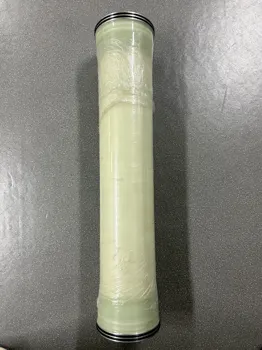
The principle of the membrane separation section is that the dissolution and diffusion rate of organic vapor in the membrane material is much higher than that of air. When the mixed gas containing organic vapor passes through the membrane, the organic component preferentially passes through the membrane to become the enrichment side and is sent back to the condensation inlet to form an internal circulation, while the air side is discharged as purified gas. The performance of the membrane depends on selectivity and flux, and too high inlet concentration will cause membrane fouling and load concentration, which is why it needs to be placed after condensation.
| Comparison item | single stage condensation | Two-stage condensation membrane separation |
|---|---|---|
| treatment mechanism | Liquefaction by cooling only | Liquefaction followed by dissolution and diffusion separation |
| Applicable concentration | High concentration gas source with high efficiency | High concentration and low concentration connection treatment |
| Outlet concentration | Limited by refrigerant temperature level | Can further reduce the residual concentration |
| load distribution | All borne by condensation | Condensation carrier body and membrane carrier depth |
Focus on whether the condensation outlet temperature falls within the set range and whether the inlet concentration of the membrane section is stable. High condensation temperature will increase the load of the membrane section and affect its service life. The performance attenuation of the membrane section usually shows a slow decline in the recovery amount, and it is necessary to judge whether to clean or replace it according to the data. Record the entry and exit parameters of the two levels as a trend, and it is clear at which level the problem occurs.
Yes, but it depends on the emission requirements. Condensation is limited by the temperature level of the refrigerant, and it is difficult to meet the stricter emission management requirements when the residual concentration is too high. At this time, it is more appropriate to string the first-stage membrane separation.
The membrane is sensitive to inlet concentration, and high concentration will aggravate pollution and load concentration, shorten life. The main body is liquefied by condensation first, and the low concentration residue is treated by the membrane section, so as to take into account the efficiency and life.
Return to the condensation inlet to form an internal cycle, the organic components into the condensation recovery, to avoid direct discharge caused by loss.
This article by LuoyangWohong PetrochemicalEquipment Co., Ltd. arranges that the company provides design, manufacturing and operation and maintenance services for condensation recovery, membrane separation recovery and complete solvent recovery devices for chemical and pharmaceutical enterprises. If you need process evaluation or scheme configuration, please contact and exchange.
Mr. Li 13526990215

Hotline





