
The amount of xylene in the coating and printing industry is relatively large, usually with butyl acetate, glycol ether and other mixed solvents. Its boiling point is between 138 ℃ and 144 ℃, and the boiling points of the three isomers are close to each other. It is a medium boiling range aromatic hydrocarbon solvent: it is more difficult to condense than toluene and better than high boiling point solvent. It is in a favorable position on the recovery route. The common practice is to collect xylene and light components separately by graded condensation after collection.
The common point of the two industries is that the solvent is concentrated in spraying, leveling and drying, and the location is relatively concentrated. Many workshops are closed or semi-closed, and the difficulty of collection and transformation is lower than that of open workshops. The collection concentration goes up, and so does the efficiency of condensation recovery.
Another advantage is that the exhaust gas temperature is controllable. The exhaust temperature of the drying section is higher, but as long as the cooling treatment is done first, the working condition of the condensation section is much more stable.
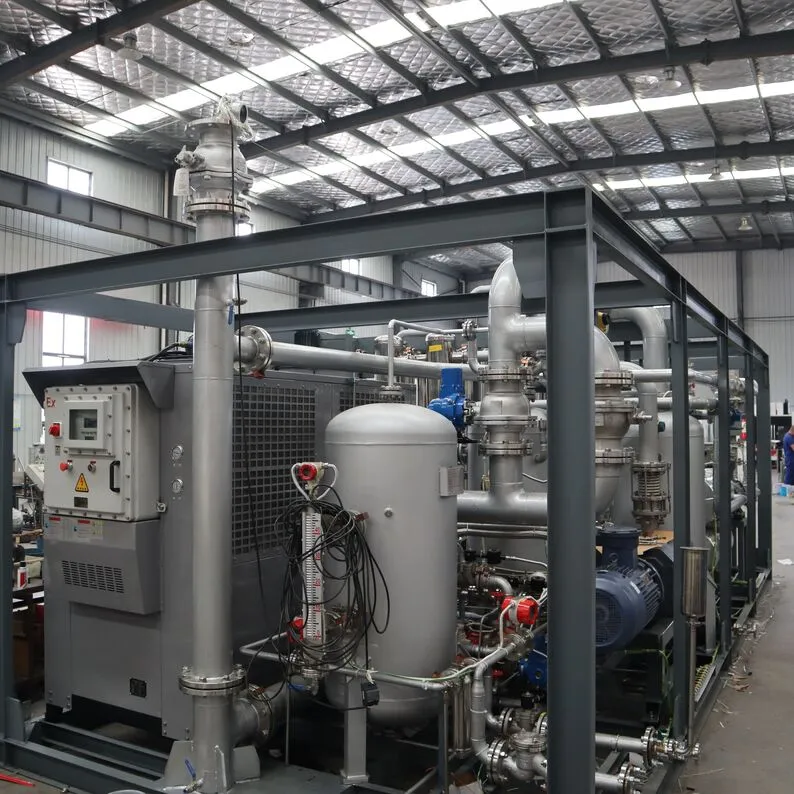
Spraying is generally done in the spray room or water curtain cabinet, and this part of the exhaust itself is organized. The temperature and concentration of exhaust gas in the leveling and drying links are higher, so it can be connected separately to cool down first and then enter the condensation section.
The exhaust ports of gravure and flexo printing units in the printing industry are relatively scattered. In practice, they are grouped according to the units. Each group is connected by a branch pipe into the main pipe, which is equipped with a liquid collection point.
Two points should be paid attention to in the pipeline layout: first, the elbows and tee joints should be as few as possible to reduce dead areas prone to liquid accumulation; The second is that the angle at which the branch pipe is connected to the main pipe follows the direction of air flow to avoid local resistance rise caused by back blowing.
The idea of graded condensation of mixed solvents is: first use a higher temperature to condense the high boiling point components, and then use a lower temperature to collect the lighter components. The boiling range of xylene determines that it can be recovered in large quantities in the first stage, which is why the return on investment for this type of solvent recovery is relatively impressive.
If the tail gas also contains butyl acetate and other higher boiling point components, the temperature of the first stage should be determined according to the highest boiling point components, otherwise this part will run to the second stage in large quantities, pushing up the load of the low temperature section.
| Segment | Configuration considerations | Description |
|---|---|---|
| Spraying and leveling | The air can be collected by the spray room itself. | Design branch pipe and hood according to air volume of spray room |
| Drying exhaust | High temperature needs to cool down first | High temperature air intake will significantly increase the consumption of cold |
| printing unit | Group collection by unit | The unit is started and stopped frequently, and the branch pipes shall be able to be switched on and off independently. |
| Condensation section | According to the boiling range of more than two stages | High boiling point components are collected first, light components are collected later. |
| Collected liquid diversion | Slope and collecting point of pipeline | Avoid rising of pipe resistance caused by accumulation of condensate |
| Back section check | determined by emission target | Set up additional check section when strict requirements |
The recovered liquid obtained by condensation is generally a mixed solvent, and the water content depends on the humidity of the incoming gas. If the process is sensitive to moisture, the recovered liquid needs to be dehydrated or rectified and reused; if it is only used for less demanding purposes such as cleaning, the treatment can be simplified. It is recommended to do component and moisture testing before reuse as a basis for judgment.
The measurement and destination of the recovered liquid should also be recorded as a daily basis for judging the efficiency of the recovery section. If it is found that the amount of recovered liquid continues to decline for a period of time, and the amount of solvent input in the process does not change, it is necessary to check the state of the heat exchange surface and pipeline.
The recovery rate is related to the inlet concentration, condensation temperature and heat transfer area, and cannot be given a fixed number. In general, the higher the intake concentration, the more reasonable the temperature level configuration, the higher the recovery rate, the specific value should be calculated on the basis of the measured intake conditions.
Depends on the purpose. As a cleaning solvent, it is usually easy to handle. As a formula solvent for reuse, it is necessary to detect the components and moisture, and reuse it after dehydration or rectification if necessary.
Direct entry is not recommended. High temperature air intake will greatly increase the consumption of cold energy, and may also bring out more water vapor. Usually pre-cooling or heat exchange cooling is done first, and then into the condensation section.
This article by LuoyangWohong PetrochemicalEquipment Co., Ltd. arranges that the company provides design, manufacturing and operation and maintenance services for condensation recovery, membrane separation recovery and complete solvent recovery devices for chemical and pharmaceutical enterprises. If you need process evaluation or scheme configuration, please contact and exchange.
Mr. Li 13526990215

Hotline





