
How to recover the ethylene glycol dimethyl ether waste gas? The main line is three steps: the reaction kettle breathing, vacuum system and cleaning link of the ether-containing tail gas closed collection, through two-stage condensation to most of the vapor condensation down recovery, condensate using its water completely miscible, non-stratified characteristics of the refining unit dehydration purification, according to the quality of reuse. It has a boiling point of about 85 ℃ and is extremely flammable. The three key points of this process line are collection tightness, anti-static fortification and condensate refining.
The first is the boiling point of medium, volatile. The boiling point of about 85 ℃ makes the normal temperature exposure obviously volatile. The reaction kettle breathing, vacuum pump discharge and cleaning operations will form continuous discharge. The collection system will approve the air volume according to the peak working condition.
The second is highly flammable. The combustion range of the mixture of ether vapor and air is wide. The whole system of fan, electrical and anti-static grounding shall be protected according to flammable medium. The collection pipeline shall be connected and grounded. The fire resistance facilities shall be checked periodically.
The third is completely miscible with water. Condensate does not stratify after mixing with carrying water vapor, and cannot be separated by standing like esters. Dehydration must go through a refining unit. This characteristic directly determines the condensate treatment route and operating cost.
The breathing port of the reaction kettle and the vacuum pump discharge separate branch pipes, which are stabilized by the buffer tank before being introduced into the main pipe. The cleaning tank and the feeding point shall be locally enclosed and supplied with directional exhaust. The breathing port of the storage tank is connected with the lead pipe. Before the multi-strand branch is merged, the simultaneous use coefficient shall be approved to avoid the dilution concentration of large air volume. The pipeline should keep the slope set at a low point for drainage, and the ether pipeline should also pay attention to avoiding light and sealing to reduce the risk of long-term storage and deterioration.
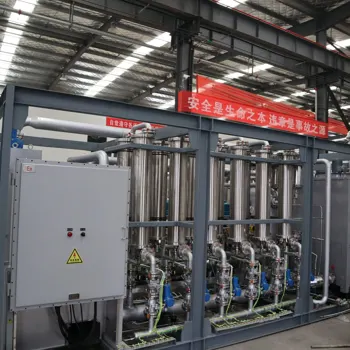
The mainstream configuration is two-stage condensation: the front stage is precooled and dehumidified, the rear stage is cryogenic to condense ether vapor, and the cold energy is recovered between the two stages to reduce energy consumption; The low-temperature pipeline valve is insulated to prevent condensation, and the system implements anti-static and fire resistance according to flammable medium. The mutual solubility of ethers and water makes the water vapor precipitated from the front stage directly dissolve into the condensate. The condensate tank is not designed to be layered, and the condensate is directly sealed and sent to the refining unit to avoid open moisture absorption. Its recovery comparison with other ether alcohol solvents is shown in the following table:
| comparison dimension | ethylene glycol dimethyl ether | Common ester and ketone solvents |
|---|---|---|
| boiling point | Approximately 85°C | By variety, the span is relatively large |
| water-soluble | Completely miscible with water, condensate does not stratify | Most insoluble or slightly soluble, stratified |
| Condensate treatment | Directly sent to refining unit for dehydration and purification | After standing, separate layers, and dry as required |
| Storage attention | Sealed to avoid light, anti-oxidation deterioration | Conventional sealed storage |
Distillation is the main method for the dehydration and purification of the mutual soluble condensate: the working condition of the tower is determined according to the components and moisture content of the condensate, and the dehydration depth is determined according to the quality requirements for reuse; the refined residual liquid is used or entrusted for disposal according to the components and quality, and the ledger is registered batch by batch. The recovered liquid shall be tested in batches before being reused in reaction ingredients or cleaning processes. Ethers are prone to oxidation and deterioration for a long time. In occasions with long reuse cycle, the stock shall be controlled, first in, first out. Batches with abnormal appearance and odor shall be tested before destination.
After refined dehydration and batch testing, those with quality meeting the batching requirements can be recycled for reaction or cleaning. Batches with oxidation deterioration or excessive impurities shall be entrusted for disposal according to the waste solvent path, which shall be determined by the measured data.
The stratification is formed by the immiscible two phases. Ethylene glycol dimethyl ether and water are miscible in any proportion. There is no interface to divide. The standing time will only increase the moisture absorption. Therefore, the refining unit must be dehydrated. This cost is included in the scheme design.
Seal to avoid light, reduce contact with air, and control storage temperature; Before reuse of long-stored batches, the appearance and quality tests shall be conducted. Abnormal batches shall not be used again. The inspection and test cycle shall be written into the operation procedures.
LuoyangWohong PetrochemicalEquipment Co., Ltd. provides design, manufacture, installation, commissioning and operation and maintenance services for water soluble medium recovery devices such as ethylene glycol dimethyl ether. Please contact and exchange.
This article is organized by Luoyang wohong petrochemical equipment co., ltd. if you need water-soluble solvent recovery scheme evaluation or on-site investigation, please contact and exchange.
Mr. Li 13526990215

Hotline





