
Xylene is a widely used aromatic hydrocarbon solvent in coating, printing, artificial leather and pharmaceutical and chemical industries, with high volatility and strong odor, which belongs to VOCs varieties that need to be treated with emphasis. The boiling point of xylene is around 140 degrees Celsius, which is higher than that of esters and ketones. A lower temperature is required for condensation and recovery, or membrane separation is used to enrich and recover low-concentration residual components. The following describes the recovery and treatment scheme and configuration points of xylene waste gas.
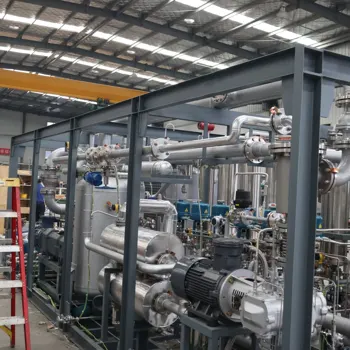
The boiling point of xylene is on the high side. If the high recovery rate is achieved only by condensation, the energy consumption and frosting management pressure of the cryogenic section are both large. After joining the membrane separation unit, the condensation section can operate at a more economical temperature, and the residual xylene can be handed over to the membrane unit for enrichment and reflux, and the overall recovery rate and energy consumption are more balanced. This is also a common process combination for aromatic containing systems.
| Type of solvent | boiling point characteristics | Configuration focus |
|---|---|---|
| Esters (ethyl acetate, etc.) | Lower | Most of the condensation section can be recovered |
| Ketones (butanone, acetone) | low | Attention to water solubility and stratification |
| Aromatic hydrocarbons (xylene, toluene) | Higher | Condensing membrane separation combination is more economical |
| Chlorine (dichloromethane, etc.) | low | Special matching of material compatibility |
Q: xylene waste gasactivated charcoalCan't adsorption work?
Answer: Adsorption can purify the gas to the standard, but the solvent is transferred to the adsorbent, which is difficult to recycle directly. If the goal is solvent reuse, the liquefaction recovery route of condensation plus membrane separation is more appropriate.
Q: How to deal with the large air volume and low concentration of exhaust gas in the spray booth?
Answer: You can concentrate first and then enter the recovery device, or use shunt collection to collect the gas at high concentration points separately and then give priority to recovery.
Q: Can the recovered xylene be reused?
Answer: The condensate under a single solvent system can be used after standing, layering and simple treatment. The mixed system needs to be separated according to the process requirements.
Q: Is there a safety risk to the operation of the device?
Answer: According to the explosion-proof partition, electrical and instrument selection, configuration concentration monitoring and interlock protection, operation safety is the basic requirement of the scheme design.
LuoyangWohong PetrochemicalEquipment Co., Ltd. focuses on condensation and membrane separation of VOCs organic solvent liquefaction recovery device, covering aromatic hydrocarbons, esters, ketones and chlorinated solvents and other systems. Welcome to call the exchange of working conditions.
Mr. Li 13526990215

Hotline





