
Dichloromethane is a chlorine-containing solvent used in pharmaceutical, pharmaceutical intermediates and precision cleaning industries. Its boiling point at atmospheric pressure is only about 40 degrees Celsius, and it is extremely volatile at room temperature. This "volatile" feature is a good thing for recovery: low boiling point means that a large amount of dichloromethane vapor can be liquefied at a non-low condensation temperature. The recovery process based on condensation has ideal recovery cost and effect. After condensation, membrane separation can be used to purify the residual vapor.
Different from high boiling point solvents, dichloromethane exhaust gas condensation does not require a very low temperature level. Conventional frozen water condensation can usually recover most of the vapor. For scenes with large gas volume or strict outlet concentration requirements, cryogenic cooling and membrane separation are added. The particularity of chlorine-containing solvent lies in the selection of materials: wet chlorine-containing system is highly corrosive to ordinary carbon steel, corrosion-resistant materials are selected for parts contacting liquid phase, and the restrictions on materials in gas phase side and dry state section are relatively loose.
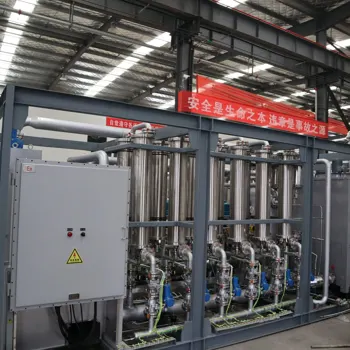
The lower the condensation temperature, the lower the concentration of residual dichloromethane in the gas phase, the higher the recovery rate, but the energy consumption of refrigeration also increases. The project is configured according to the principle of "setting the end temperature level according to the emission requirements": first recover the main body with the conventional freezing water temperature level, and then decide whether to deepen the cold section and membrane separation section according to the emission management requirements, so as to avoid operation waste caused by the allocation of too deep cold quantity in one step.
| Comparison item | Dichloromethane | ethyl acetate and other esters |
|---|---|---|
| Atmospheric boiling point | about 40 degrees Celsius | 70 to 80 degrees Celsius |
| Condensation temperature level | Conventional frozen water condensation can be a large number of liquefaction | The conventional condensation temperature is similar, and the load is smaller. |
| Material selection | Parts in contact with liquid phase shall be resistant to chlorine corrosion. | Conventional materials |
| respiratory loss | Low boiling point, breathing exhaust must be collected | Relatively small respiratory loss |
During operation, focus on monitoring the condensation outlet temperature and recovery curve: abnormal increase in outlet temperature often means insufficient load of refrigeration unit or scaling of heat exchange surface; When the recovery rate decreases, priority should be given to checking whether there is leakage and bypass in the air source collection pipe network. Ventilation and occupational health management shall be carried out in the chlorine-containing solvent area, leakage detection shall be set in the unit area, and the recovery ledger and procurement ledger shall be linked to check the solvent balance.
The wet chlorine-containing materials are highly corrosive. The heat exchanger, storage tank and pipeline contacting the condensate are made of corrosion-resistant materials. The restrictions on the gas-coherent section are relatively loose. The materials are selected according to the process temperature and humidity conditions.
Waste liquid regeneration and waste gas recovery are two lines: the waste liquid can be sent to the distillation regeneration unit for purification and reuse, and the process tail gas is connected to the condensation recovery unit, which can share the condensation and distillation facilities.
The cryogenic section and membrane separation section are added on the basis of conventional condensation, and the residual steam is further intercepted to purify the tail gas to meet the stricter emission management requirements.
This article by LuoyangWohong PetrochemicalEquipment Co., Ltd. arranges that the company provides design, manufacturing and operation and maintenance services for condensation recovery, membrane separation recovery and complete solvent recovery devices for chemical and pharmaceutical enterprises. If you need process evaluation or scheme configuration, please contact and exchange.
Mr. Li 13526990215

Hotline





