
Butyl acetate is a commonly used ester solvent in coating, printing ink and adhesive industry. Its boiling point is higher in esters, and its volatility is milder than that of ethyl acetate. However, the dosage is large, the concentration of waste gas is not low, and the recovery value is considerable. One of its favorable conditions is that it is almost insoluble in water, the condensed liquid is easy to stratify with the entrained water, the separation is much simpler than the alcohol solvent, and the condensation-based recovery process has better applicability.
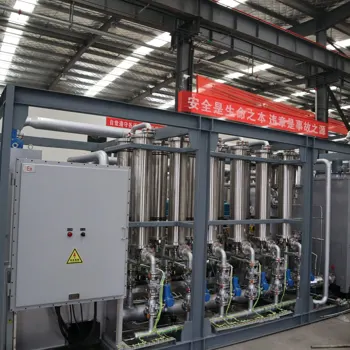
The conventional route is condensation and membrane separation: the condensation section liquefies most of the butyl acetate vapor according to the component temperature, and the upper organic phase is taken for reuse after the condensate is standing and stratified; the membrane separation section is arranged after condensation to intercept the residual organic vapor and form an internal circulation, and the purified tail gas is discharged according to the emission management requirements. For the gas source with stable concentration and small gas volume, the compact configuration of single-stage condensation and membrane separation can be covered. Where the gas volume fluctuates greatly, a buffer tank needs to be set before condensation.
The lower the condensation temperature, the lower the residual vapor concentration, the higher the degree of recovery, and the corresponding increase in refrigeration energy consumption. Butyl acetate has a high boiling point and is relatively easy to condense. Usually, most of the conventional freezing water temperature can be recovered. Whether deep cooling is required or not should be determined according to the actual emission management requirements and the content of low boiling point components in the gas source, so as to avoid long-term excessive refrigeration load in pursuit of lower outlet concentration.
Unclear stratification is usually related to water entrainment or emulsification in the air source. First check the water entrainment of the upstream process, and if necessary, set up a static or separation link in the condensate tank to improve stratification.
Applicable. The concentration of butyl acetate exhaust gas in the paint blending and coating process is high and the gas volume is medium, which can be covered by the skid-mounted configuration of condensation and membrane separation, which is calculated according to the on-site gas source.
Condensate can be recycled to production according to the reuse standard after static stratification and sampling inspection. Distillation and purification can be added for occasions with high purity requirements.
Operation focuses on monitoring the condensate outlet temperature, condensate stratification and recovery trend. Unclear stratification of condensate often means that the gas source is entrained with water or emulsified, and the upstream process needs to be checked. If the recovery amount decreases, priority will be given to checking whether the collection pipe network is bypassed and whether the heat exchange surface is fouled. Integrate the recovery volume, input volume, and procurement volume into a material balance, and quantify the recovery efficiency using data.
This article by LuoyangWohong PetrochemicalEquipment Co., Ltd. arranges that the company provides design, manufacturing and operation and maintenance services for condensation recovery, membrane separation recovery and complete solvent recovery devices for chemical and pharmaceutical enterprises. If you need process evaluation or scheme configuration, please contact and exchange.
Mr. Li 13526990215

Hotline





