
Glycol ether solvents (propylene glycol methyl ether, ethylene glycol butyl ether, diethylene glycol butyl ether, etc.) are commonly used carriers and film-forming solvents for coatings, cleaning, electronic and resin processes. The boiling point is generally between 120 ℃ and 230 ℃, and most varieties are miscible with water or easily soluble in water. These two characteristics determine its recovery idea: the tail gas is collected in a closed manner and then condensed, and the condensation section has little burden; The real effort is to purify the recovered liquid-it cannot be dehydrated by static stratification, but distillation is the main means. For varieties with high boiling point or heat sensitivity, vacuum distillation is used to reduce the temperature of the kettle to avoid high temperature decomposition and discoloration. The recycled liquid is either reused directly or further refined, depending on the test results.
First, it has a high boiling point and low vapor pressure. The amount of volatilization in the normal temperature open environment is not large, but in the high temperature processes such as drying and curing, the solvent is discharged with the hot air flow, with high emission concentration and simple composition. This kind of tail gas is the best recovery condition. The second is that most varieties are miscible with water, the condensate is not stratified, and cannot be dehydrated by standing like aromatic hydrocarbons and some esters. The water content of the recovered liquid must be controlled by distillation. The third is the use of occasions with resin, pigments, additives, the recovery of liquid often with high boiling point impurities, purification link to leave a margin.
On the occasion of discharge, the exhaust gas of spraying and drying line has large air volume, high temperature and high concentration. The cleaning tank and cleaning process are volatile at normal temperature of the liquid surface, with low concentration but long duration. Reactor solvent replacement and equipment purging are intermittent high concentration discharge. The collection and recovery configuration of the three types of occasions should be designed separately.
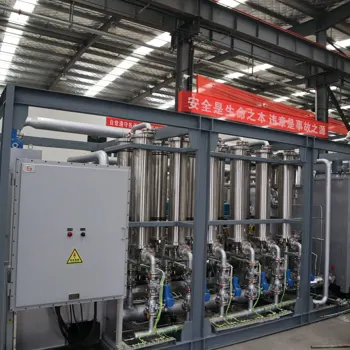
The exhaust gas collection of the drying line is relatively ready-made: the exhaust gas of the oven is connected to the main pipe, but before entering the recovery section, pre-cooling is done to reduce the high-temperature air flow to the vicinity of the condensation temperature, and the load and safety of the condensation section are well arranged. The liquid surface volatilization of the cleaning tank should be collected by branch pipes at the side of the tank or covered by the liquid surface and added with directional ventilation. When the concentration is not high, it can be combined with the drying tail gas in the main pipe. However, before the combination, it should be calculated according to the air volume and concentration to avoid diluting the high concentration branch to uneconomical recovery.
For intermittent discharge of reactor replacement and purging, an independent branch with air valve is set up. During operation, the valve is opened for collection and closed after completion to keep the main concentration. The total air volume shall be approved according to the simultaneous use coefficient for multi-branch merging, and the fan and condensing section shall not be selected according to the peak value superposition.
The condensation section is relatively easy for glycol ethers: high boiling point means low vapor pressure, most of the tail gas can be condensed when it is cooled to normal temperature or water-cooled temperature, and the low-temperature cryogenic link is only the end. When the residual concentration of tail gas is very low and the target is to meet the emission standards, the post-stage of concentration or adsorption treatment can be arranged according to the concentration level, and the measured concentration shall prevail.
Purification of the recovered liquid is a key aspect of the formulation process. Varieties that are miscible with water should be distilled and dehydrated first. The recovered liquid with impurities such as resin and pigment shall be filtered or evaporated and concentrated before rectification to remove slag. For varieties with high boiling point, the temperature of the atmospheric rectification kettle will be very high, and the heat source requirement and the pressure on the material will be large. After the vacuum distillation is used, the vacuum degree will go up and the kettle temperature will go down, the material will not easily decompose and change color, and the heat source temperature requirement will also be lowered by one gear. This is the most common configuration choice in the recovery of high boiling point ether alcohol.
| Variety | boiling point magnitude | Recycling configuration considerations |
|---|---|---|
| Propylene glycol methyl ether | About 120 ℃ | Moderate boiling point, atmospheric distillation can be collected, focusing on distillation dehydration |
| Butyl glycol | About 171 ℃ | High boiling point, vacuum distillation to reduce kettle temperature, high temperature discoloration prevention |
| Butyl diglycol | About 230 ℃ | High boiling point, mainly vacuum distillation, heat source temperature in advance accounting |
| Commonality of recovery liquid | mutual solubility with water | Can not stand stratification, dehydration by distillation, first filter slag removal |
The treatment sequence of the recovered liquid is generally: first filter to remove slag, then rectify and dehydrate, and further cut and purify if necessary. Reuse evaluation follows the process: cleaning and dilution applications that are not sensitive to moisture and chroma can be reused after dehydration. For applications with high requirements such as resin synthesis and electronic cleaning, the refining depth shall be arranged according to the detection data. The recovery liquid storage tank shall remain sealed and equipped with a breather valve, and the electrostatic grounding of the piping and storage tank shall be kept intact.
The daily record of the recovery amount is the basis for judging the state of the system: when the input amount is stable and the recovery amount declines, first check whether the collection point seal, heat exchange surface fouling and condensation temperature drift.
Most varieties and water soluble or soluble in water, static separation layer, dehydration depends on distillation. The recovered liquid is filtered to remove slag before distillation, and the moisture index is controlled according to the subsequent use, which is one more dehydration link than aromatic hydrocarbons.
High boiling point varieties of atmospheric distillation kettle temperature is very high, the material is easy to decompose discoloration, heat source requirements are also high. After decompression, the kettle temperature drops with the vacuum degree, the material safety and heat source temperature level requirements are also reduced by one gear, and the equipment and operating costs are well arranged.
Just the opposite. High boiling point means that the normal temperature vapor pressure is low, and most of the tail gas can be condensed when it is cooled to the water cooling temperature, and the burden on the condensation section is not large. The real energy consumption and configuration focus on the distillation and purification of the recovered liquid.
Cleaning, dilution and other uses that are not sensitive to moisture can be used after filtration and dehydration. For applications with high requirements such as resin synthesis and electronic cleaning, the refining depth shall be arranged according to the detection data of moisture, chroma and distillation range.
This article by LuoyangWohong PetrochemicalEquipment Co., Ltd. arranges that the company provides design, manufacturing and operation and maintenance services for condensation recovery, membrane separation recovery and complete solvent recovery devices for chemical and pharmaceutical enterprises. If you need process evaluation or scheme configuration, please contact and exchange.
Mr. Li 13526990215

Hotline





