
Propylene glycol methyl ether is a commonly used ether alcohol solvent in coating, printing ink, cleaning and electronic industry. Its boiling point is about 120 ℃, and it is completely miscible with water. Its volatilization rate at room temperature is slower than that of esters and ketones. However, waste gas will continue to form in spraying, dipping, cleaning and drying links. Its recovery idea can be summarized in two sentences: tail gas is collected in a closed manner, condensed in stages, and most of the solvent is recovered; Condensate and water are miscible and not stratified. Dehydration and purification are mainly based on distillation, and the refining depth is determined according to the reuse purity requirements.
The first is high boiling point and relatively mild volatilization at room temperature, but the amount of tail gas in spraying atomization, open cleaning and high-temperature drying is not small, especially the temperature in the drying section is high, and the solvent concentration in the tail gas is significantly higher than that in the normal temperature process. The second is flammable. Ether alcohols are flammable liquids. The collection and transportation links should be treated according to flammable media. Fan selection, anti-static grounding and electrical explosion-proof cannot be saved. The third is hygroscopic, miscible with water, condensate and washing water mixed together without stratification, water separation is the key to the quality of recovery.
In addition, the odor threshold of propylene glycol methyl ether is low, and when workshops and factories are sensitive to odor, even if the concentration is not high, the collection and emission control should be detailed to avoid unorganized emission.
The normal temperature open operation point (dip coating, scrubbing and manual cleaning) is the source of continuous volatilization. Local enclosure and directional ventilation are added to restrict the air flow in the cover and then introduce it into the main pipe. The spraying room organizes the air flow according to the requirements of the cross-section wind speed. The air temperature at the end of the drying section is high and the concentration is high. A separate branch circuit is set up to lead out, and cool down first before entering the condensation section. When multiple branches are merged, the air volume shall be approved according to the simultaneous use coefficient, and the pipeline shall maintain the slope and set a low point for drainage.
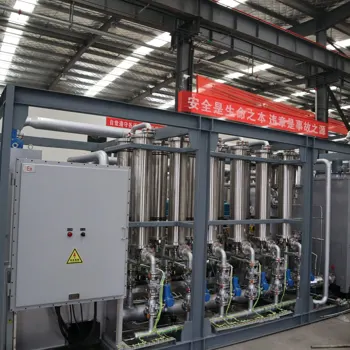
Before the tail gas enters the condensation section, if paint mist or dust is entrained, filter and defoam first to protect the heat exchange surface; the conveying pipeline and fan are selected according to the requirements of flammable medium, and the crossover and grounding are kept intact.
The boiling point of propylene glycol methyl ether is about 120 ℃, which is a bit higher than that of common esters and ketones. A considerable part can be condensed out by water cooling at normal temperature. To raise the recovery rate further, two stages are generally arranged: the front stage is cooled by water or frozen water to press down the temperature and load, and the rear stage is closed at a lower temperature to condense the residual steam as much as possible. The specific temperature level and recovery rate are approved by the measured data and are not based on estimates.
Condensate is a mixture of propylene glycol methyl ether and water, not stratified, dehydration depends on distillation. The number of trays and reflux ratio shall be configured according to the reuse purity requirements. For applications with high purity requirements, deep dehydration or adsorption finishing shall be added. A small amount of other solvents mixed in the recovery liquid shall be cut and treated according to the distillation range or mixed with the stock liquid to avoid affecting the reuse quality.
| Recycling route | Applicable scenarios | Configuration considerations |
|---|---|---|
| two-stage condensation | Single variety, medium and high boiling point tail gas | Simple configuration, low operating costs, temperature level according to the measured approval. |
| condensation distillation dehydration | Recycled liquid for use in moisture-sensitive applications | Increase of distillation units, higher energy consumption and land occupation |
| adsorption concentration desorption condensation | Spraying tail gas with large air volume and low concentration | Concentrate first and then condense, and the condensing unit is configured according to small air volume and high concentration. |
The recovered liquid is filtered to remove impurities first, then dehydrated by distillation, and reused in different grades according to the application: cleaning and dilution applications have loose requirements on moisture and chroma, and can be reused after qualified dehydration; For purposes sensitive to purity such as paint preparation and electronic cleaning, the refining depth shall be arranged according to the distillation range and impurity detection data. The temporary storage shall be kept airtight and the breathing valve shall be reserved. The anti-static grounding shall be intact. The container shall be marked with the variety and testing status to avoid cross storage with strong oxidizing materials.
The input volume and recovery volume are recorded on a daily basis in the ledger. When the recovery volume drops abnormally, first check the sealing of the collection point, the drift of condensation temperature and the scaling of the heat exchange surface, and then check the operation status of the distillation system.
Cannot. It is completely miscible with water, and cannot be separated into layers upon standing. Dehydration depends on rectification. Uses with high purity requirements are then equipped with deep dehydration or adsorption finishing.
The boiling point of about 120 ℃ means that a larger part can be condensed by water cooling at normal temperature, but to improve the recovery rate, the latter stage still needs a lower refrigerant temperature to finish. The specific gradation is determined by the measured concentration and recovery rate target.
Direct condensation to deal with all the air volume, equipment and energy consumption are large. This kind of tail gas should be adsorbed and concentrated first, then desorbed and condensed, or the collected air volume should be recalculated according to the measured concentration, so that the condensing unit can operate under low air volume and high concentration.
The recovery route is similar, all are closed collection plus condensation plus distillation. The difference is mainly in occupational health management: some varieties of glycol ethers have stricter contact limits and higher requirements for tightness and detection frequency. Propylene glycol methyl ether has a higher boiling point and a milder condensation temperature.
This article by LuoyangWohong PetrochemicalEquipment Co., Ltd. arranges that the company provides design, manufacturing and operation and maintenance services for condensation recovery, membrane separation recovery and complete solvent recovery devices for chemical, coating and electronic industries. If you need process evaluation or scheme configuration, please contact and exchange.
Mr. Li 13526990215

Hotline





